- Dispensing and Oiling Control Points Of Polypropylene yarn spinning oil
- Practice For Warehouse Storage And Quality Maintenance Of Textile Spinning Finis
- How Custom Textile Spin Finish Solutions Adapt to Diversified Fiber Manufacturing Needs
- Polypropylene Yarn Spinning Oil: Key Auxiliary for Stable High‑speed PP Fiber Production
- Formulation Key Points and Spinning‑line Adaptation of Polypropylene Yarn Spinning Oil
- Selection Points and Spinning‑line Application of Heat Transfer Oil

- Contact: Miss Tang
- Telephone: 0086-18926870629
- Email: taonano@taonanooil.com
- Address:No. 59, Liantang Road, Sanzhong Village, Qingxi Town, Dongguan City, Guangdong Province
Polypropylene spinning equipment works under a wide range of speeds. Tow stress, friction frequency and thermal condition differ between low‑speed and high‑speed spinning. Polypropylene yarn spinning oil shall match corresponding process conditions to keep stable spinning and reduce fuzz and yarn breakage. Some factories directly apply old‑grade oil after speed upgrading and encounter various production abnormalities.
For low‑speed spinning, tow tension remains relatively gentle. Oil agents mainly meet basic antistatic and lubricating requirements to guarantee tow bundling and forming. When spinning speed rises, friction frequency between tow and thread guides increases greatly with instant frictional heat. Under such circumstances, oil‑film strength and thermal stability of Polypropylene yarn spinning oil become critical. Insufficient oil‑film strength leads to film damage under high‑speed friction, direct fiber‑to‑fiber contact and increased fuzz.
Friction coefficient range shall also be considered for high‑speed conditions. Excessively high friction coefficient brings large running resistance and higher breakage risk. Too low friction coefficient causes tow slipping, tension fluctuation and poor winding quality. Oil formula shall balance lubricating and cohesive performance instead of over‑emphasizing single indicator.
Oil pick‑up rate needs fine‑tuning together with spinning‑speed adjustment. Parameters for low‑speed production cannot be copied directly. Gradient tests help to obtain reasonable oil‑content range for new rotating speed. For new oil‑grade replacement, lab and pilot trials shall be carried out to monitor fuzz rate, breakage rate and bobbin forming quality.
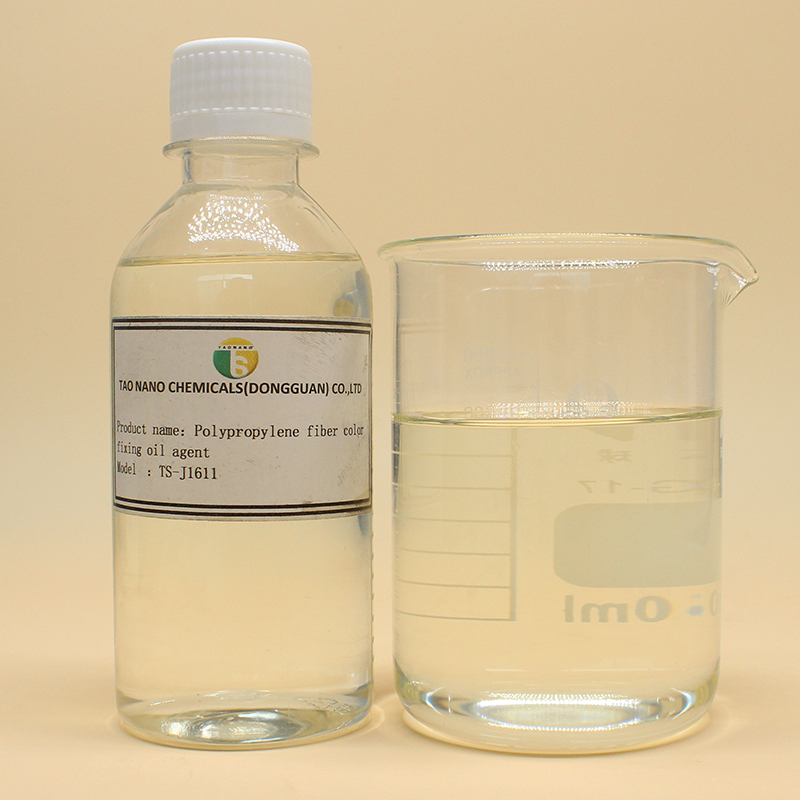
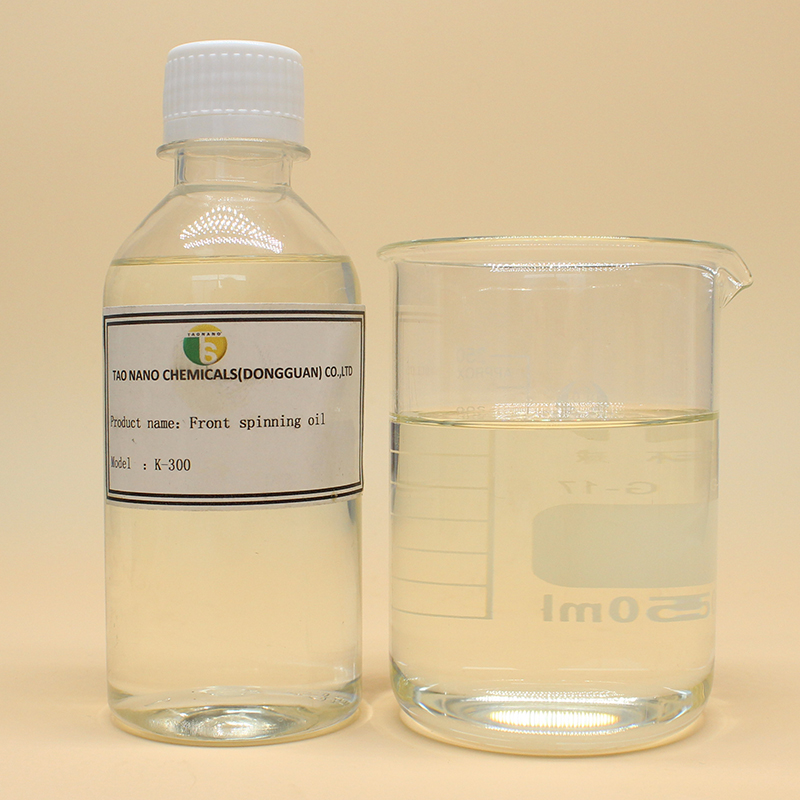
TAO NANO CHEMICALS(DONGGUAN) CO.,LTD. devotes to textile oil R&D and develops Polypropylene yarn spinning oil for various spinning speeds and tow specifications. Supported by lab testing facilities, it provides process matching and sample‑testing service for polypropylene manufacturers.
- Dispensing and Oiling Control Points Of Polypropylene yarn spinning oil
- Practice For Warehouse Storage And Quality Maintenance Of Textile Spinning Finis
- How Custom Textile Spin Finish Solutions Adapt to Diversified Fiber Manufacturing Needs
- Polypropylene Yarn Spinning Oil: Key Auxiliary for Stable High‑speed PP Fiber Produc
- Formulation Key Points and Spinning‑line Adaptation of Polypropylene Yarn Spinning O
- Selection Points and Spinning‑line Application of Heat Transfer Oil