- Practical Influence of Thermal Stability of Polypropylene Yarn Spinning Oil on Hot‑Drawing Process
- Causes of Oil Pick‑up Fluctuation of Polypropylene Yarn Spinning Oil and Production‑Line Control Solutions
- What Cascading Troubles Will Pre‑Coking Heat‑Transfer Oil Bring to Polypropylene Fiber Spinning Lines
- Which Indicators of Polypropylene Staple Fiber Oil Determine Roller‑Wrapping and Fiber Agglomeration in High‑Speed Carding Process
- Deterioration and Odor of Polypropylene Yarn Pre-spinning Oil Emulsion: Common Pitfalls in Storage and Dilution
- Large Variation of Pick-up Rate of PP Pre-spinning Oil: How to Control Oil Uniformity on Yarn

- Contact: Miss Tang
- Telephone: 0086-18926870629
- Email: taonano@taonanooil.com
- Address:No. 59, Liantang Road, Sanzhong Village, Qingxi Town, Dongguan City, Guangdong Province
During polypropylene spinning, yarn bundles go through multi‑stage hot‑drawing and setting on hot rolls and hot plates. Polypropylene yarn spinning oil contacts high‑temperature environment together with fibers. Thermal stability of spin finish directly determines equipment cleanliness and finished yarn quality. Many manufacturers only focus on oil‑coating and anti‑static performance while ignoring high‑temperature behavior, which leads to equipment scaling and fiber yellowing after long‑time production.
Polypropylene yarn spinning oil with poor thermal stability suffers thermal decomposition and oxidation under hot‑drawing condition. Low‑molecular volatiles accumulate on hot‑roll and thread‑guide surfaces and gradually form viscous deposits. Accumulated dirt causes yarn adhesion, fuzz and breakage. Frequent shutdown for cleaning reduces effective production time. Some decomposition residues stick to fiber surface and result in slight yarn yellowing, damaging color purity of solution‑dyed polypropylene yarn.
Thermal resistance evaluation for Polypropylene yarn spinning oil shall not rely merely on short‑term high‑temperature test data. Long‑duration thermal processing simulation is necessary. Well‑formulated polypropylene yarn spinning oil adopts carefully‑selected components with low volatilization and anti‑coking performance under heat, lowering hot‑roll cleaning frequency and supporting long‑term continuous spinning. Less decomposition residues preserve yarn appearance and reduce risks of color deviation and yellowing.
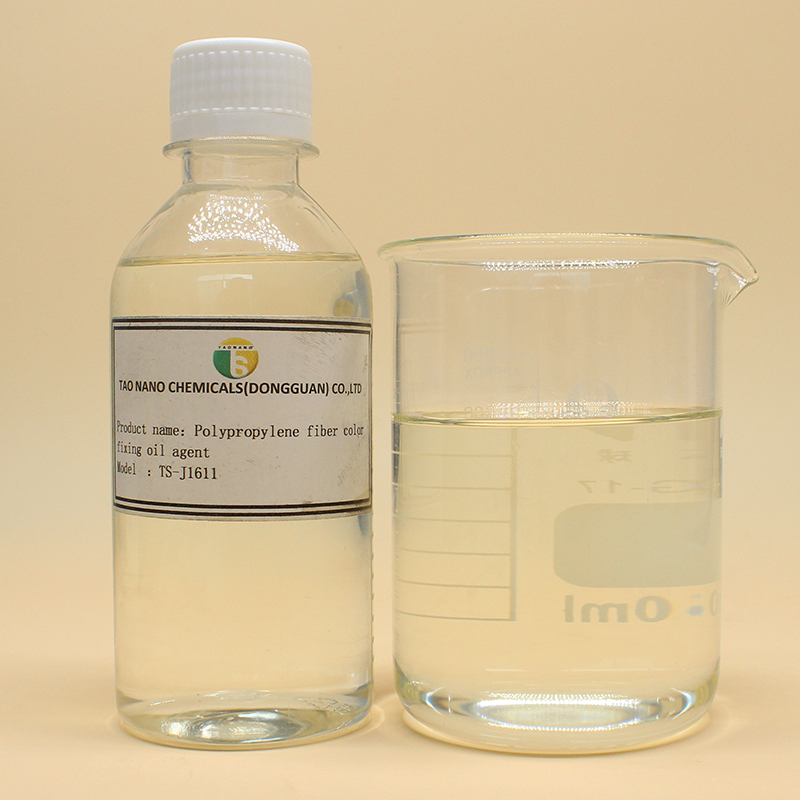
Different production routes require different thermal‑resistance grades. FDY one‑step spinning operates at higher hot‑roll temperature and sets stricter thermal requirements for polypropylene yarn spinning oil compared with staple‑fiber spinning. TAO NANO CHEMICALS(DONGGUAN) CO.,LTD. develops matched Polypropylene yarn spinning oil for various spinning processes. Optimized formula suppresses volatilization and coking risk to fit multifilament and staple‑fiber production lines.
Besides routine physical‑chemical tests, chemical‑fiber mills are suggested to run continuous thermal simulation test during spin‑finish sampling. Observe scaling on hot components and fiber appearance to comprehensively evaluate real‑world thermal performance of Polypropylene yarn spinning oil and lower later‑stage maintenance workload.
- Practical Influence of Thermal Stability of Polypropylene Yarn Spinning Oil on Hot‑D
- Causes of Oil Pick‑up Fluctuation of Polypropylene Yarn Spinning Oil and Production&
- What Cascading Troubles Will Pre‑Coking Heat‑Transfer Oil Bring to Polypropyle
- Which Indicators of Polypropylene Staple Fiber Oil Determine Roller‑Wrapping and Fib
- Deterioration and Odor of Polypropylene Yarn Pre-spinning Oil Emulsion: Common Pitfalls in
- Large Variation of Pick-up Rate of PP Pre-spinning Oil: How to Control Oil Uniformity on Y