
- Large Variation of Pick-up Rate of PP Pre-spinning Oil: How to Control Oil Uniformity on Yarn
- Deterioration and Odor of Polypropylene Yarn Pre-spinning Oil Emulsion: Common Pitfalls in Storage and Dilution
- Fuzz and Break‑outs in High‑Speed Spinning with Polypropylene Pre‑Spinning Oil? Analysis of Pitfalls in Wetting Performance and Anti‑Coking Property
- How to Match Proper Spinning Oil for Geotextile and Hygiene‑Grade Polypropylene Staple Fiber
- Carding‑Roller Tangling Caused by Polypropylene Staple Fiber Oil? Analysis of Production Risks Brought by Thermal‑Stability & Emulsion Compatibility

- Contact: Miss Tang
- Telephone: 0086-18926870629
- Email: taonano@taonanooil.com
- Address:No. 59, Liantang Road, Sanzhong Village, Qingxi Town, Dongguan City, Guangdong Province
In the production line of polypropylene fibers, the spinning process requires reliable lubrication and static control. Polypropylene yarn spinning oil is a commonly used finishing agent that helps maintain stable operation and consistent fiber quality.
Functions of PP Spinning Oil
Untreated polypropylene filaments generate considerable friction when passing over ceramic guides and metal rollers. The material itself has low moisture absorption, which leads to static electricity buildup during high-speed processing. These issues may cause filament breakage, loose strands, or uneven winding.
Applying Polypropylene yarn spinning oil forms a thin lubricating film on the filament surface. This film reduces contact friction, dissipates electrostatic charges, and bundles individual filaments into a cohesive yarn. Production facilities using proper spinning oil typically experience fewer process interruptions.
Application Method
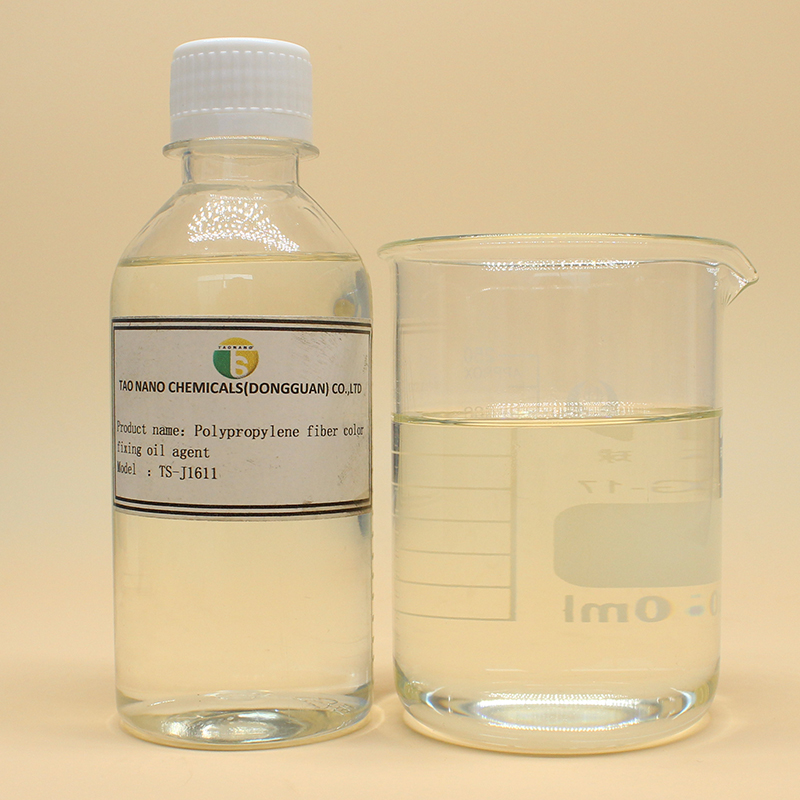
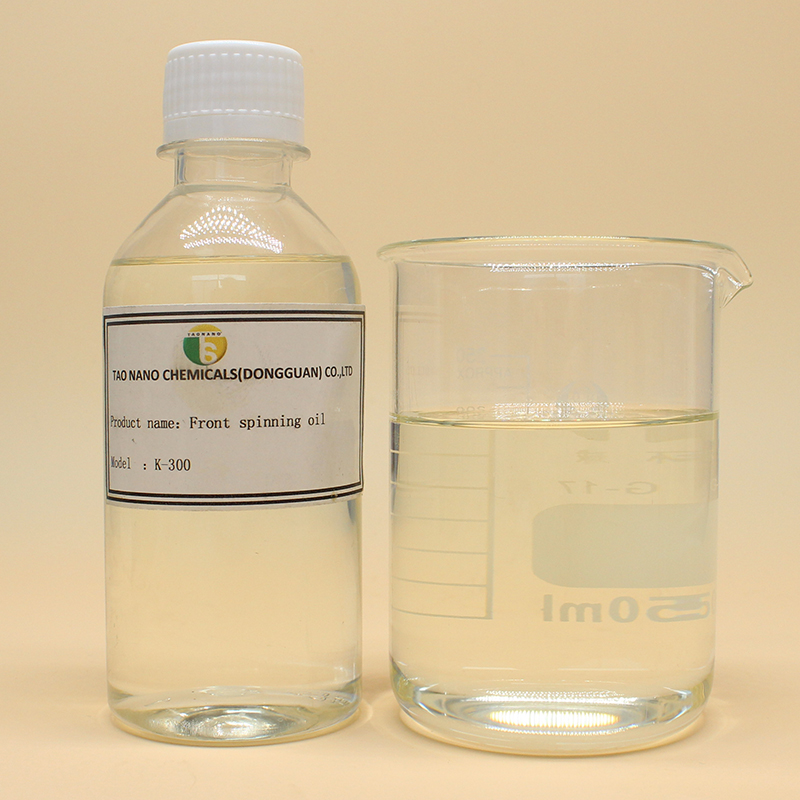
Polypropylene fiber oil is usually supplied as a clear or pale yellow liquid. Operators dilute the concentrate with softened water at a ratio ranging from 1:6 to 1:10, depending on the desired oil pickup percentage and yarn denier. The emulsion temperature is kept between 25°C and 35°C during mixing. A slow stirring motion prevents foam formation.
The diluted oil emulsion is applied via metered roller applicators or spray systems positioned between the godet rollers and the winder. Oil pickup for PP yarns is generally controlled at 0.5% to 1.2% by weight.
Selection and Storage Considerations
When choosing a Polypropylene yarn spinning oil, it helps to check its thermal stability, emulsion stability, and resistance to yellowing. A product that leaves minimal residue on heated godet rollers requires less frequent cleaning. Storage areas should be kept between 10°C and 30°C, away from direct sunlight and moisture. Sealed containers prevent contamination and maintain product consistency.
Proper use of Polypropylene yarn spinning oil contributes to smoother production runs and more uniform yarn properties. Facilities that track oil concentration and applicator roller speed often achieve better repeatability across different batches.
- Large Variation of Pick-up Rate of PP Pre-spinning Oil: How to Control Oil Uniformity on Y
- Deterioration and Odor of Polypropylene Yarn Pre-spinning Oil Emulsion: Common Pitfalls in
- Fuzz and Break‑outs in High‑Speed Spinning with Polypropylene Pre‑Spinni
- How to Match Proper Spinning Oil for Geotextile and Hygiene‑Grade Polypropylene Stap
- Carding‑Roller Tangling Caused by Polypropylene Staple Fiber Oil? Analysis of Produc