

- Large Variation of Pick-up Rate of PP Pre-spinning Oil: How to Control Oil Uniformity on Yarn
- Deterioration and Odor of Polypropylene Yarn Pre-spinning Oil Emulsion: Common Pitfalls in Storage and Dilution
- Fuzz and Break‑outs in High‑Speed Spinning with Polypropylene Pre‑Spinning Oil? Analysis of Pitfalls in Wetting Performance and Anti‑Coking Property
- How to Match Proper Spinning Oil for Geotextile and Hygiene‑Grade Polypropylene Staple Fiber
- Carding‑Roller Tangling Caused by Polypropylene Staple Fiber Oil? Analysis of Production Risks Brought by Thermal‑Stability & Emulsion Compatibility

- Contact: Miss Tang
- Telephone: 0086-18926870629
- Email: taonano@taonanooil.com
- Address:No. 59, Liantang Road, Sanzhong Village, Qingxi Town, Dongguan City, Guangdong Province
As domestic polypropylene spinning equipment upgrades toward high‑speed operation, many chemical‑fiber plants face typical production troubles: with well‑adjusted polypropylene chips and spinning‑temperature parameters, fuzz, filament break‑outs, loose tow cohesion and poor winding formation frequently occur. Technicians often adjust spinnerets and oil‑application‑roller speed with limited improvement. Root causes usually lie in wetting performance and anti‑coking property of polypropylene pre‑spinning oil.
Polypropylene is hydrophobic with low surface energy. Conventional oil emulsion with insufficient wetting speed cannot spread evenly onto every single filament under high‑speed conditions. Local oil‑film deficiency appears. Unprotected monofilaments generate fuzz and break‑outs after friction with yarn guides and tension rollers. Poor wetting also brings uneven oil‑pick‑up among filaments, inconsistent friction coefficient, tow vibration and bad winding bobbin formation.
Thermal anti‑coking acts as another key indicator for polypropylene pre‑spinning oil. During hot‑drawing and heat‑setting, poor thermal‑stable oil will have low‑molecular components volatilized and oxidized, forming coke‑like deposits on hot‑roller and guide‑parts surfaces. Deposits continuously scratch tow and cause persistent fuzz, requiring frequent shutdown and cleaning and reducing effective equipment runtime. Some low‑cost oil agents cut anti‑oxidant additives. Lab samples pass room‑temperature tests, while coking defects only emerge during long‑term mass‑production.
Circulating oil‑supply conditions also demand stable emulsion. Hard‑water‑induced emulsion demulsification also triggers abnormal oil‑application. During procurement, besides room‑temperature lubrication and anti‑static indexes, continuous running simulation under real spinning‑speed and hot‑roller temperature shall be performed to verify wetting spreading and anti‑coking performance before mass adoption.
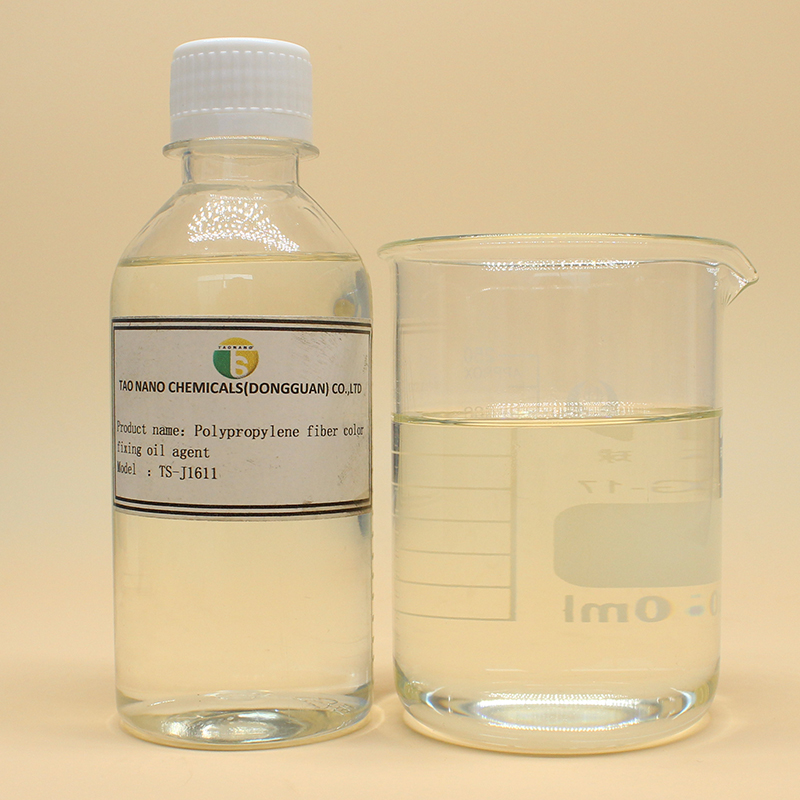
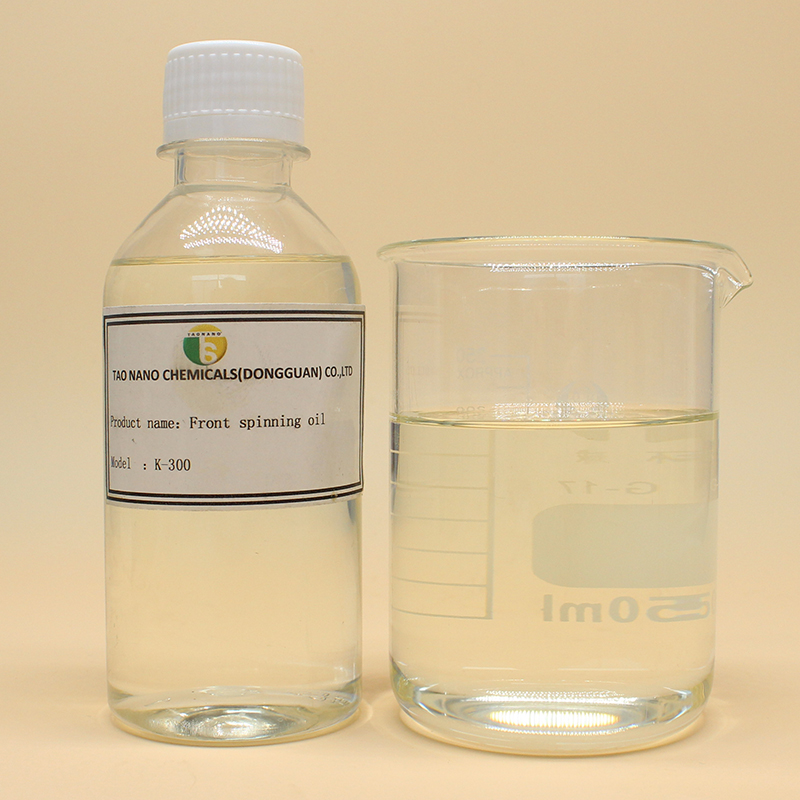
Dongguan Tao Nano Chemicals Co., Ltd. focuses on R&D of polypropylene oil series. Our polypropylene pre‑spinning oil features optimized wetting‑emulsifying formula and enhanced anti‑coking capacity for high‑speed polypropylene filament & staple‑fiber lines. Our in‑house lab provides simulated spinning sample‑test to evaluate fuzz and coking risks, helping factories cut shutdown loss and improve spinning full‑bobbin rate.
- Large Variation of Pick-up Rate of PP Pre-spinning Oil: How to Control Oil Uniformity on Y
- Deterioration and Odor of Polypropylene Yarn Pre-spinning Oil Emulsion: Common Pitfalls in
- Fuzz and Break‑outs in High‑Speed Spinning with Polypropylene Pre‑Spinni
- How to Match Proper Spinning Oil for Geotextile and Hygiene‑Grade Polypropylene Stap
- Carding‑Roller Tangling Caused by Polypropylene Staple Fiber Oil? Analysis of Produc