

- Large Variation of Pick-up Rate of PP Pre-spinning Oil: How to Control Oil Uniformity on Yarn
- Deterioration and Odor of Polypropylene Yarn Pre-spinning Oil Emulsion: Common Pitfalls in Storage and Dilution
- Fuzz and Break‑outs in High‑Speed Spinning with Polypropylene Pre‑Spinning Oil? Analysis of Pitfalls in Wetting Performance and Anti‑Coking Property
- How to Match Proper Spinning Oil for Geotextile and Hygiene‑Grade Polypropylene Staple Fiber
- Carding‑Roller Tangling Caused by Polypropylene Staple Fiber Oil? Analysis of Production Risks Brought by Thermal‑Stability & Emulsion Compatibility

- Contact: Miss Tang
- Telephone: 0086-18926870629
- Email: taonano@taonanooil.com
- Address:No. 59, Liantang Road, Sanzhong Village, Qingxi Town, Dongguan City, Guangdong Province
As polypropylene staple‑fiber non‑woven lines upgrade toward high‑speed operation, many chemical‑fiber plants face tough troubles: all spinning‑stage indicators pass inspection, yet finished staple fibers cause frequent roller‑tangling, fly‑away fibers and increased neps on high‑speed carding machines, which greatly reduces non‑woven fabric yield. Technicians often adjust carding‑machine parameters first with limited improvement. Root causes usually trace back to thermal‑stability, emulsion compatibility and oil‑pick‑up uniformity of Polypropylene staple fiber oil.
Polypropylene features ultra‑low moisture regain and high insulation. Polypropylene staple fiber oil fulfills triple functions of lubrication, bundling and static‑elimination. Poor thermal‑stability leads to volatilization and oxidative decomposition of partial components during crimping and heat‑setting. Low‑molecular residues precipitate onto fiber surfaces. Friction and heat during carding further trigger static‑electric discharge and roller tangling. Poor heat‑resistance also causes coke‑like oil deposits on crimp rollers and hot plates during long‑run production and increases equipment‑cleaning frequency.
Emulsion compatibility matters significantly. Polypropylene staple fiber oil belongs to oil‑in‑water emulsion system. Unbalanced emulsification results in delamination and local agglomeration. Even if diluted working‑liquid looks normal, uneven oil‑film thickness appears on fibers. Excessive local oil content makes fibers stick together and form stubborn neps; insufficient oil dosage fails to dissipate static and brings fly‑away fibers. Excessive water‑hardness accelerates emulsion demulsification. Many factories ignore calcium‑magnesium ions in circulating water and suffer batch‑to‑batch processing fluctuation.
During procurement, lab‑sample static‑resistance and lubrication performance are not sufficient. Aging and dilution simulation under factory heat‑setting temperature and circulating‑water quality shall be carried out to evaluate heat‑resistance and hard‑water tolerance before mass adoption.
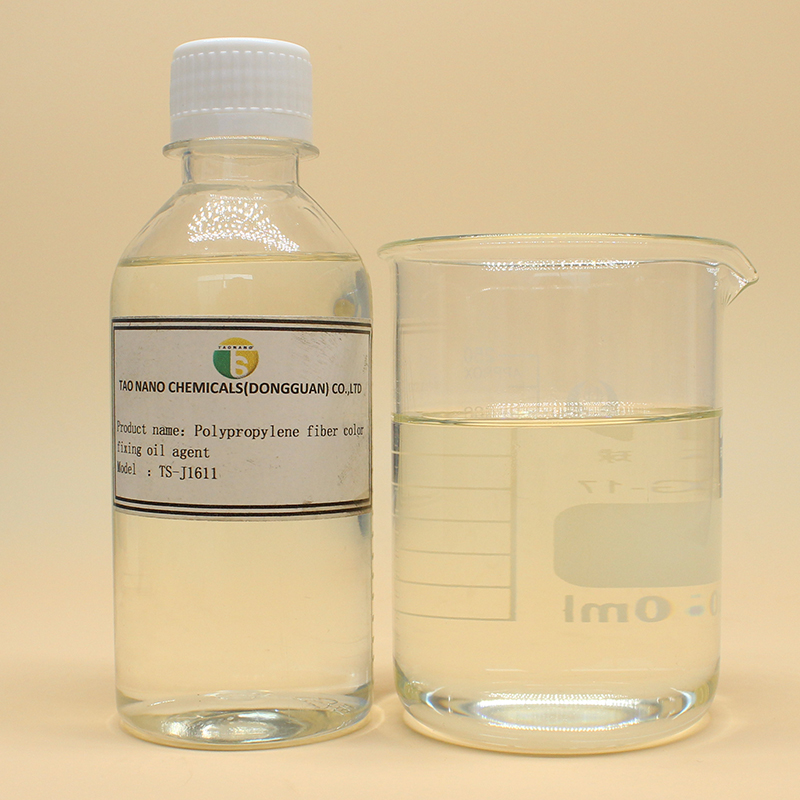
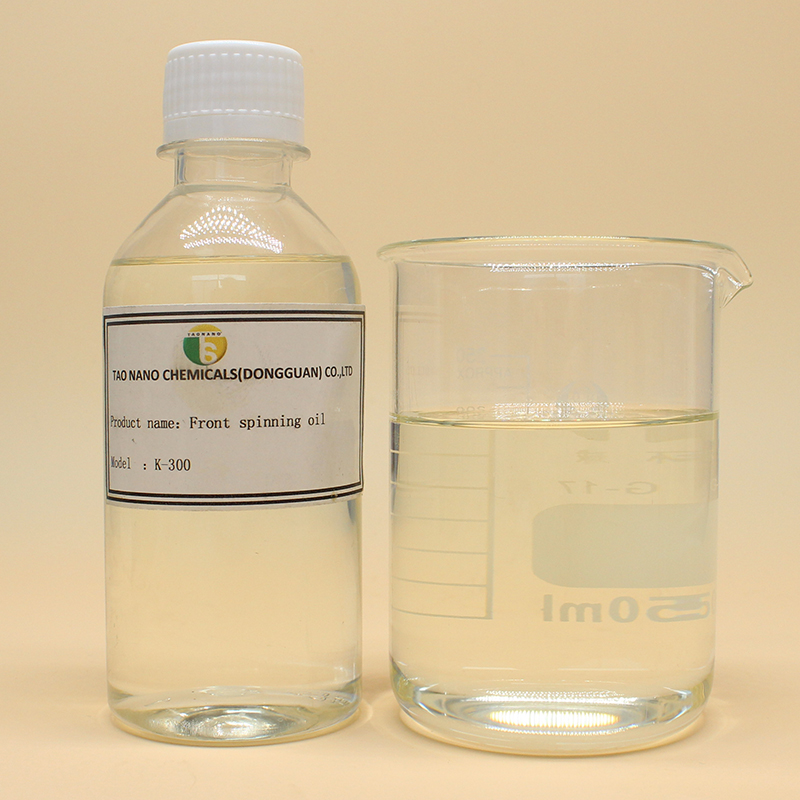
TAO NANO CHEMICALS(DONGGUAN) CO.,LTD. focuses on textile‑oil R&D. Our Polypropylene staple fiber oil is optimized for high‑speed non‑woven conditions with enhanced thermal‑stability and hard‑water‑resistant emulsion system to mitigate carding‑roller tangling and nep defects. Our in‑house lab supports dilution simulation and thermal‑aging sample tests for chemical‑fiber manufacturers. Formulas are matched with varied spinning and setting processes to reduce hidden production‑line shutdown loss.
- Large Variation of Pick-up Rate of PP Pre-spinning Oil: How to Control Oil Uniformity on Y
- Deterioration and Odor of Polypropylene Yarn Pre-spinning Oil Emulsion: Common Pitfalls in
- Fuzz and Break‑outs in High‑Speed Spinning with Polypropylene Pre‑Spinni
- How to Match Proper Spinning Oil for Geotextile and Hygiene‑Grade Polypropylene Stap
- Carding‑Roller Tangling Caused by Polypropylene Staple Fiber Oil? Analysis of Produc