
- Practical Influence of Thermal Stability of Polypropylene Yarn Spinning Oil on Hot‑Drawing Process
- Causes of Oil Pick‑up Fluctuation of Polypropylene Yarn Spinning Oil and Production‑Line Control Solutions
- What Cascading Troubles Will Pre‑Coking Heat‑Transfer Oil Bring to Polypropylene Fiber Spinning Lines
- Which Indicators of Polypropylene Staple Fiber Oil Determine Roller‑Wrapping and Fiber Agglomeration in High‑Speed Carding Process
- Deterioration and Odor of Polypropylene Yarn Pre-spinning Oil Emulsion: Common Pitfalls in Storage and Dilution
- Large Variation of Pick-up Rate of PP Pre-spinning Oil: How to Control Oil Uniformity on Yarn

- Contact: Miss Tang
- Telephone: 0086-18926870629
- Email: taonano@taonanooil.com
- Address:No. 59, Liantang Road, Sanzhong Village, Qingxi Town, Dongguan City, Guangdong Province
The Role of Polypropylene Yarn Spinning Oil in Textile Manufacturing
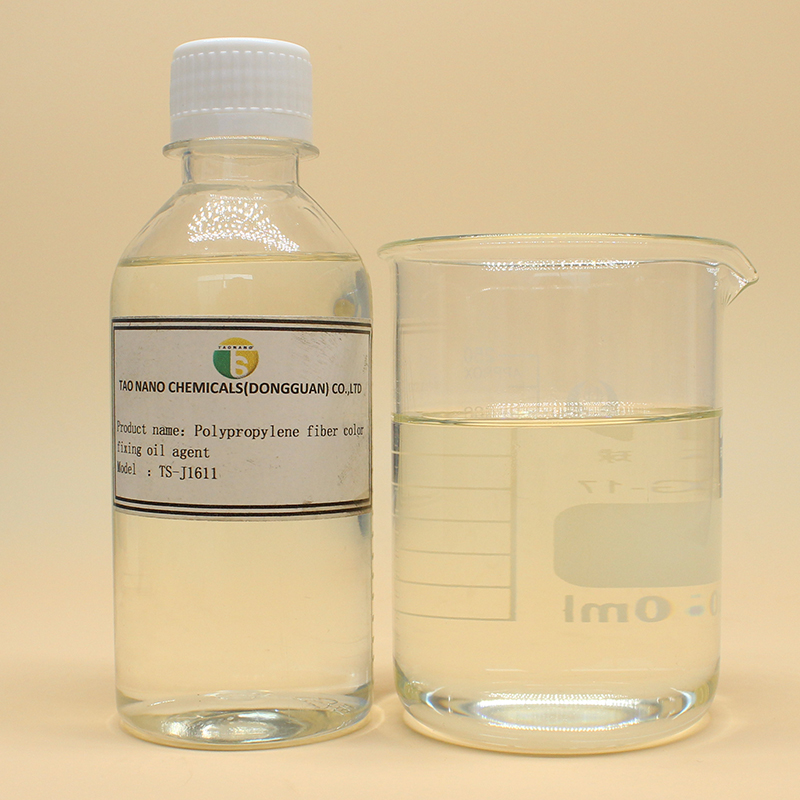
In the complex process of fiber production, the selection of the right auxiliary agent is crucial. Polypropylene Yarn Spinning Oil is not just a simple lubricant; it acts as a bridge connecting the raw material and the final high-quality fiber. Its primary function is to reduce the friction between the fiber and the equipment during the high-speed spinning process. Without this protective layer, fibers would be prone to static electricity, breakage, and uneven thickness, leading to increased production costs and wasted materials. For procurement managers, understanding this basic mechanism is the first step to ensuring smooth downstream processing.
Matching the Oil to the Application: A Practical Guide
Different production lines have different requirements, and this is where the concept of "fit" comes into play. When you are sourcing Polypropylene Yarn Spinning Oil, it is essential to consider the specific type of fiber you are producing.
For staple fiber production, the oil needs to provide excellent cohesion and anti-static properties to ensure the fibers can be easily carded and processed in subsequent steps. On the other hand, for BCF (Bulk Continuous Filament) or monofilament applications, the focus shifts towards thermal stability and lubrication to handle the high temperatures and tension involved. Choosing the wrong type can lead to compatibility issues, such as oil separation or poor dyeing results. Therefore, it is always recommended to consult with your supplier about the specific viscosity and additive package suitable for your machinery.
Selection Advice
When evaluating a Polypropylene Yarn Spinning Oil, look beyond just the price. Focus on the consistency of the oil's performance. A stable supply chain and a supplier with a proven track record in R&D are key indicators of quality. It is better to invest in a reliable product that ensures your machines run smoothly than to risk downtime with an inferior alternative.
- Practical Influence of Thermal Stability of Polypropylene Yarn Spinning Oil on Hot‑D
- Causes of Oil Pick‑up Fluctuation of Polypropylene Yarn Spinning Oil and Production&
- What Cascading Troubles Will Pre‑Coking Heat‑Transfer Oil Bring to Polypropyle
- Which Indicators of Polypropylene Staple Fiber Oil Determine Roller‑Wrapping and Fib
- Deterioration and Odor of Polypropylene Yarn Pre-spinning Oil Emulsion: Common Pitfalls in
- Large Variation of Pick-up Rate of PP Pre-spinning Oil: How to Control Oil Uniformity on Y