

- Large Variation of Pick-up Rate of PP Pre-spinning Oil: How to Control Oil Uniformity on Yarn
- Deterioration and Odor of Polypropylene Yarn Pre-spinning Oil Emulsion: Common Pitfalls in Storage and Dilution
- Fuzz and Break‑outs in High‑Speed Spinning with Polypropylene Pre‑Spinning Oil? Analysis of Pitfalls in Wetting Performance and Anti‑Coking Property
- How to Match Proper Spinning Oil for Geotextile and Hygiene‑Grade Polypropylene Staple Fiber
- Carding‑Roller Tangling Caused by Polypropylene Staple Fiber Oil? Analysis of Production Risks Brought by Thermal‑Stability & Emulsion Compatibility

- Contact: Miss Tang
- Telephone: 0086-18926870629
- Email: taonano@taonanooil.com
- Address:No. 59, Liantang Road, Sanzhong Village, Qingxi Town, Dongguan City, Guangdong Province
In the production process of polypropylene yarn, Polypropylene yarn spinning oil is a key additive that affects the processability and quality of the finished product. Since the polypropylene molecular chain lacks polar groups, the surface of the fiber has low hygroscopicity and poor conductivity, and during the spinning and stretching processes, static electricity accumulation and friction damage are prone to occur. By uniformly applying the spinning oil, a lubricating film can be formed on the surface of the yarn, thereby controlling the friction coefficient and guiding the dissipation of static charges.
From the composition of the formula, Polypropylene yarn spinning oil usually contains components such as smoothers, anti-static agents, emulsifiers, and bundlers. The smoothers are mostly made of fatty acid esters, which are responsible for reducing wear between the fibers and metal guide wire parts; the anti-static agents often use fatty alcohol phosphate salts, whose function is to reduce the frizz and roller clogging caused by static electricity. In different production lines with different spinning speeds and specifications, the thermal stability and oil film strength of the polypropylene FDY filament oil agent directly affect whether coking or uneven oil application occurs during high-speed operation. Especially in the high-speed spinning process, the oil agent must have the characteristics of fast penetration, high-temperature resistance, and no smoke emission.
For actual working conditions, different models of Polypropylene yarn spinning oil have differences in their formulation priorities. The oil agent used for cigarette-grade polypropylene filament bundles has clear requirements for bundle formation and dimensional stability, and it is necessary to avoid the filament bundles becoming fluffy and disordered. While the oil agent used for MFY or BCF polypropylene yarns places more emphasis on reducing the dynamic friction between fibers and metals, as well as between fibers and ceramics, while maintaining a high filament entanglement degree and preventing loose or detached loops during winding and forming. When selecting the type, attention should be paid to the dispersion stability of the oil agent emulsion in 25-35℃ warm water, as well as whether there is stratification or spoilage during the storage period.
During the application process, Polypropylene yarn spinning oil is usually diluted with softened water in a ratio of 10% - 15%. It is applied through the oil roller or nozzle coating process, and the coating rate is generally controlled within the range of 0.8% - 1.2%. The storage temperature of the oil agent concentrate should be kept at 10 - 35℃, which is more suitable to avoid component deterioration caused by high temperature or sun exposure. For production lines equipped with high-temperature wire guiding rollers, using a higher-grade professional polypropylene oil agent with heat resistance is beneficial to reduce thermal coking and extend the cleaning cycle.
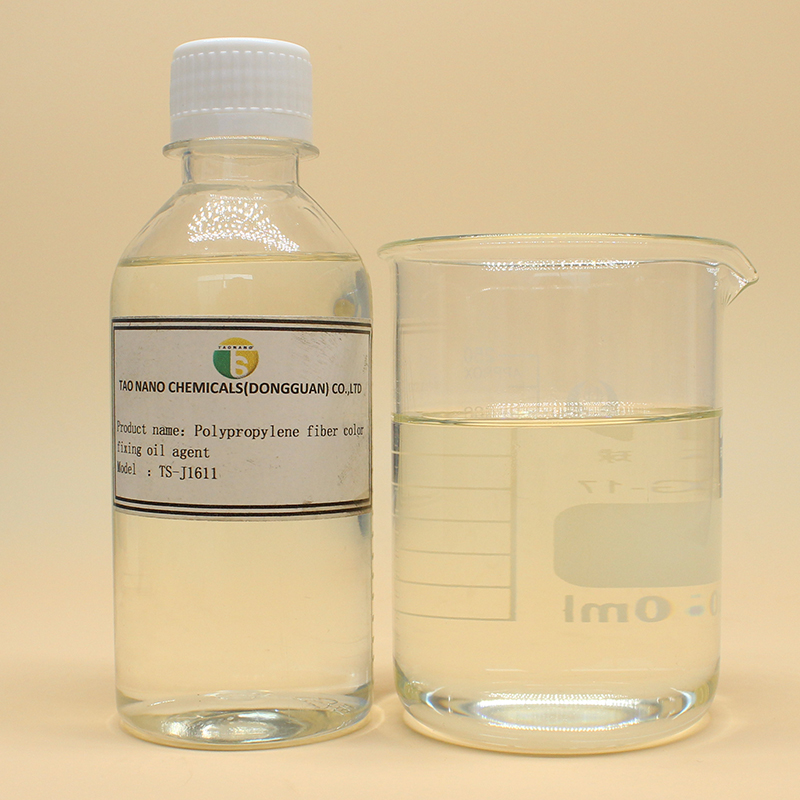
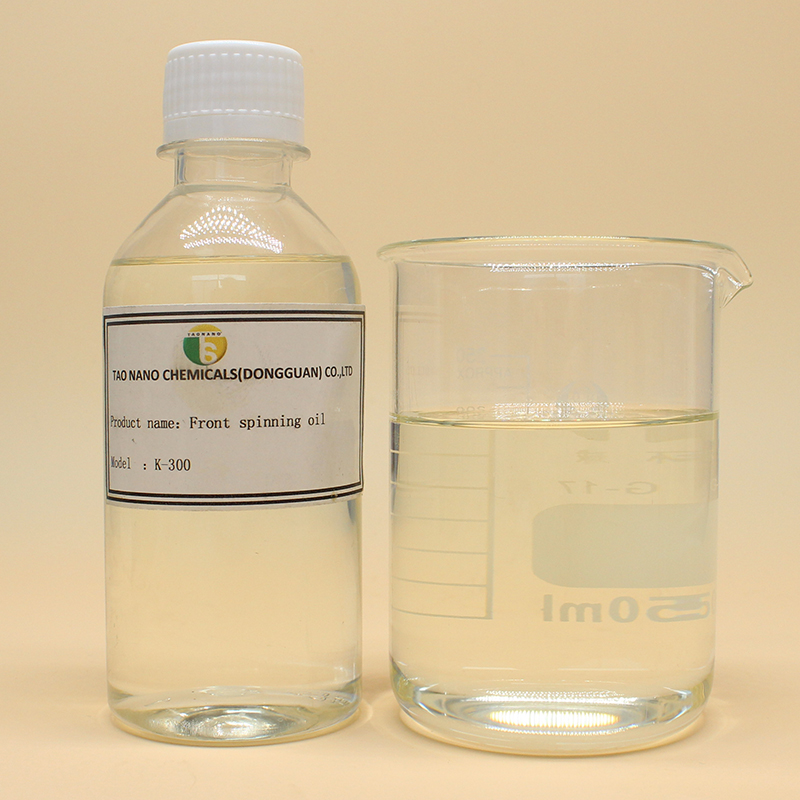
- Large Variation of Pick-up Rate of PP Pre-spinning Oil: How to Control Oil Uniformity on Y
- Deterioration and Odor of Polypropylene Yarn Pre-spinning Oil Emulsion: Common Pitfalls in
- Fuzz and Break‑outs in High‑Speed Spinning with Polypropylene Pre‑Spinni
- How to Match Proper Spinning Oil for Geotextile and Hygiene‑Grade Polypropylene Stap
- Carding‑Roller Tangling Caused by Polypropylene Staple Fiber Oil? Analysis of Produc