
- Which Indicators of Polypropylene Staple Fiber Oil Determine Roller‑Wrapping and Fiber Agglomeration in High‑Speed Carding Process
- What Cascading Troubles Will Pre‑Coking Heat‑Transfer Oil Bring to Polypropylene Fiber Spinning Lines
- Deterioration and Odor of Polypropylene Yarn Pre-spinning Oil Emulsion: Common Pitfalls in Storage and Dilution
- Large Variation of Pick-up Rate of PP Pre-spinning Oil: How to Control Oil Uniformity on Yarn
- Fuzz and Break‑outs in High‑Speed Spinning with Polypropylene Pre‑Spinning Oil? Analysis of Pitfalls in Wetting Performance and Anti‑Coking Property

- Contact: Miss Tang
- Telephone: 0086-18926870629
- Email: taonano@taonanooil.com
- Address:No. 59, Liantang Road, Sanzhong Village, Qingxi Town, Dongguan City, Guangdong Province
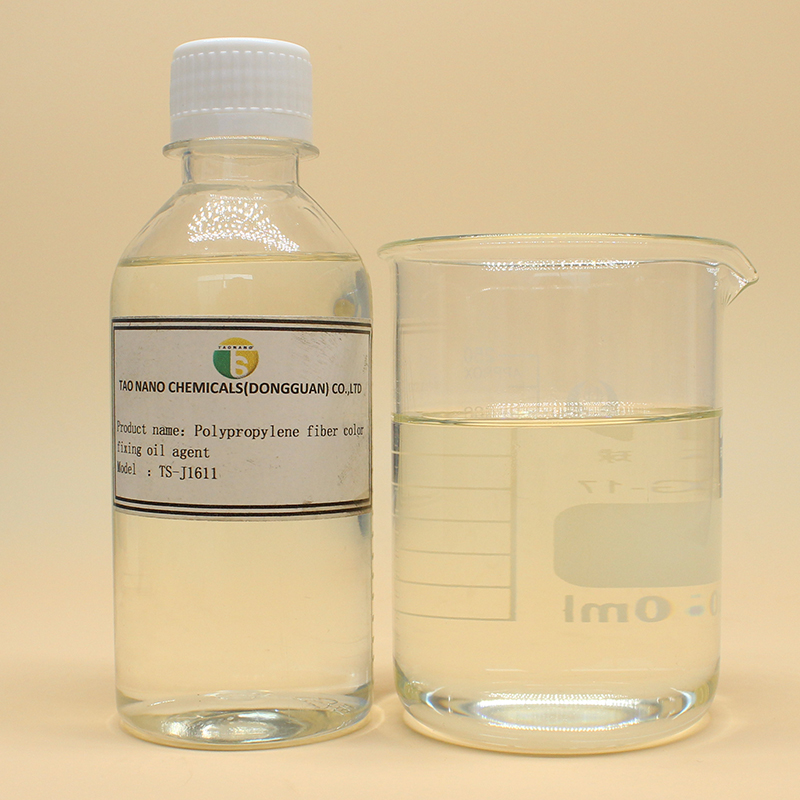
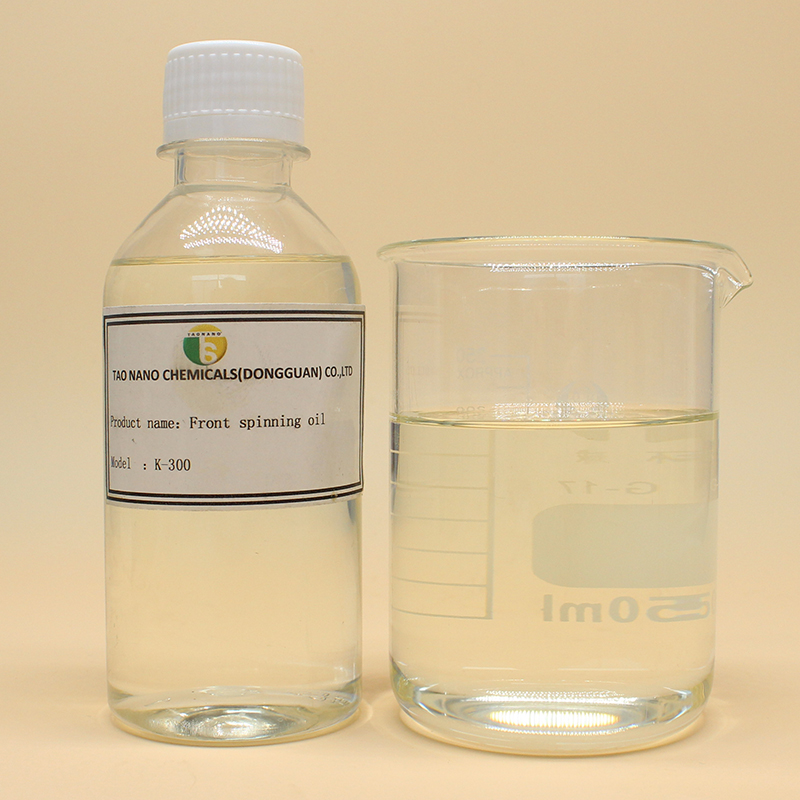
Selecting the appropriate Polypropylene yarn spinning oil for the polypropylene fiber production line and optimizing its application is an important technical step for enhancing production efficiency and ensuring fiber quality. This requires comprehensive consideration of equipment, process and product requirements.
The selection of Polypropylene yarn spinning oil begins with a comprehensive analysis of the production line. Key parameters include spinning speed (conventional spinning, high-speed spinning), spinning fineness (fine denier, coarse denier), stretching process (FDY, POY, etc.) and the temperature and humidity environment of the workshop. For example, a high-speed spinning production line requires the oil agent to have lower volatility, higher heat resistance and faster wetting speed to adapt to extremely short heat history time and higher friction frequency. When producing fibers for hygiene or medical fields, the purity, low odor and biocompatibility of the oil agent become essential considerations.
To evaluate the performance of a Polypropylene yarn spinning oil, several key indicators are typically considered:
Lubrication: This is the foundation for ensuring that the fibers pass smoothly through the guide wire and reducing wear and fraying.
Antistatic property: This is particularly important for hydrophobic polypropylene fibers, as it ensures that the fibers maintain good bundling during the processing.
Heat stability and low volatility: Prevent the oil agent from decomposing at high temperatures, which could cause the guide wire to caramelize (the "white powder" phenomenon), thereby affecting the cleanliness of the equipment and the quality of the fibers.
Emulsification stability (if applicable): For oil agents applied in the form of emulsions, the stability during storage and usage directly affects the uniformity of the oil application.
Compatibility with subsequent processes: Whether the oil agent can be easily removed during post-treatment, or whether it needs to be retained to provide additional functionality (such as lubrication during knitting), this depends on the final application.
The key to optimizing the application of Polypropylene yarn spinning oil lies in precise control. The oil pick-up rate (Oil Pick-up, OPU) is a core process parameter. If the oil pick-up rate is insufficient, it may result in high friction coefficient of the fibers and severe static electricity; if it is too high, not only will it cause waste, but it may also lead to oil splashing, equipment contamination, and even affect the feel of the fibers and the subsequent processing. It is necessary to adjust the oil concentration, the rotational speed of the oil roller, or the pressure of the oil nozzle to stabilize the oil pick-up rate within the recommended optimal range by the supplier.
- Which Indicators of Polypropylene Staple Fiber Oil Determine Roller‑Wrapping and Fib
- What Cascading Troubles Will Pre‑Coking Heat‑Transfer Oil Bring to Polypropyle
- Deterioration and Odor of Polypropylene Yarn Pre-spinning Oil Emulsion: Common Pitfalls in
- Large Variation of Pick-up Rate of PP Pre-spinning Oil: How to Control Oil Uniformity on Y
- Fuzz and Break‑outs in High‑Speed Spinning with Polypropylene Pre‑Spinni