
- Which Indicators of Polypropylene Staple Fiber Oil Determine Roller‑Wrapping and Fiber Agglomeration in High‑Speed Carding Process
- What Cascading Troubles Will Pre‑Coking Heat‑Transfer Oil Bring to Polypropylene Fiber Spinning Lines
- Deterioration and Odor of Polypropylene Yarn Pre-spinning Oil Emulsion: Common Pitfalls in Storage and Dilution
- Large Variation of Pick-up Rate of PP Pre-spinning Oil: How to Control Oil Uniformity on Yarn
- Fuzz and Break‑outs in High‑Speed Spinning with Polypropylene Pre‑Spinning Oil? Analysis of Pitfalls in Wetting Performance and Anti‑Coking Property

- Contact: Miss Tang
- Telephone: 0086-18926870629
- Email: taonano@taonanooil.com
- Address:No. 59, Liantang Road, Sanzhong Village, Qingxi Town, Dongguan City, Guangdong Province
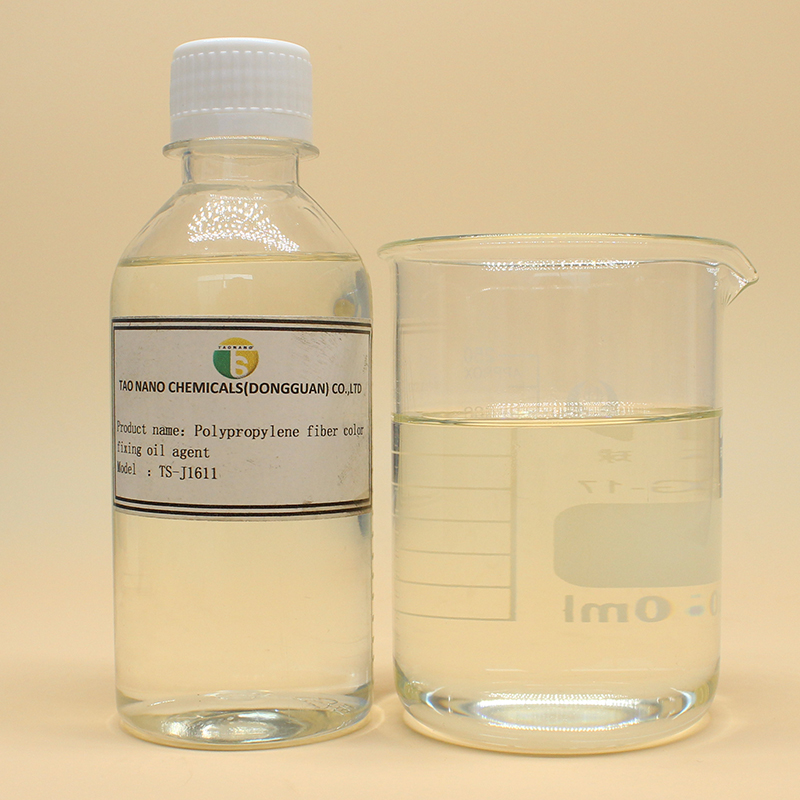
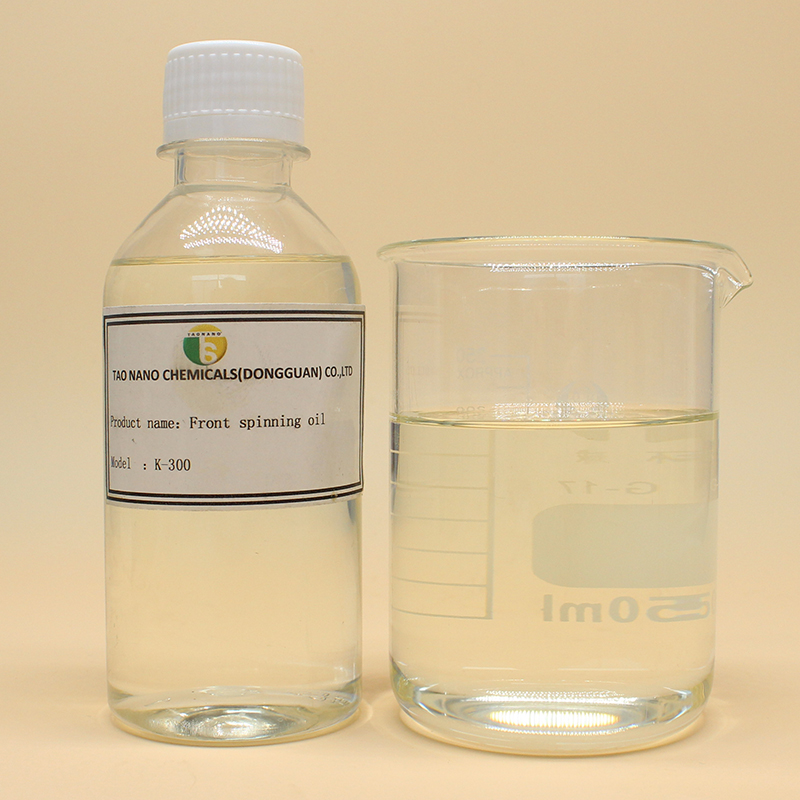
In the industrial production of polypropylene (PP) fibers, Polypropylene yarn spinning oil (the oil agent for spinning polypropylene fibers) plays a crucial role. This specialized oil agent is designed to optimize the spinning process and ensure the smooth transformation from the melt to high-quality yarn.
Polypropylene yarn spinning oil is a special chemical product designed for the spinning of polypropylene fibers. It is typically precisely applied to the surface of the fibers at the stage when the fibers have just left the spinneret and have not yet completely cooled and solidified. Its main function is to form a uniform and continuous protective oil film on the surface of the fibers. This oil film effectively reduces the dynamic friction coefficient between the fibers and between the fibers and the guide wire equipment, significantly reducing the occurrence of fuzz and breakage during the production process. At the same time, the oil agent has excellent anti-static properties, which can neutralize the static charges generated during high-speed spinning, preventing the fibers from becoming fluffy and difficult to be bundled due to static repulsion, thereby improving the operational stability and efficiency of the production line.
From a technical perspective, high-quality spinning oil suitable for polypropylene must meet specific requirements. It must have good compatibility with the polypropylene polymer and be able to evenly spread on the fiber surface quickly. Secondly, it needs to have excellent thermal stability, not volatilize or undergo thermal decomposition under the high-temperature conditions of spinning, and avoid contaminating the spinneret and guide wire due to the failure of the oil agent or the accumulation of residues. In addition, the lubricity, antistatic property, and washability (or the retention property according to the final application) of the oil agent are also important evaluation indicators.
Selecting the appropriate Polypropylene yarn spinning oil is of vital importance for ensuring the quality of the final fiber product. It not only affects the spinning process itself, but also indirectly relates to the processing performance of subsequent processes such as drawing, weaving, and dyeing. For example, the oil agent designed for high-speed spinning of POY (partially oriented filament) often focuses on its heat resistance and low volatility; while the oil agent used for producing carpet yarn or industrial filament may place more emphasis on lubrication effect and wear resistance.
As the industry's demands for production efficiency and fiber quality continue to rise, the formulation of Polypropylene yarn spinning oil is also being continuously optimized to meet the requirements of higher-speed spinning, finer fiber production, and stricter environmental standards.
- Which Indicators of Polypropylene Staple Fiber Oil Determine Roller‑Wrapping and Fib
- What Cascading Troubles Will Pre‑Coking Heat‑Transfer Oil Bring to Polypropyle
- Deterioration and Odor of Polypropylene Yarn Pre-spinning Oil Emulsion: Common Pitfalls in
- Large Variation of Pick-up Rate of PP Pre-spinning Oil: How to Control Oil Uniformity on Y
- Fuzz and Break‑outs in High‑Speed Spinning with Polypropylene Pre‑Spinni