- Which Indicators of Polypropylene Staple Fiber Oil Determine Roller‑Wrapping and Fiber Agglomeration in High‑Speed Carding Process
- What Cascading Troubles Will Pre‑Coking Heat‑Transfer Oil Bring to Polypropylene Fiber Spinning Lines
- Deterioration and Odor of Polypropylene Yarn Pre-spinning Oil Emulsion: Common Pitfalls in Storage and Dilution
- Large Variation of Pick-up Rate of PP Pre-spinning Oil: How to Control Oil Uniformity on Yarn
- Fuzz and Break‑outs in High‑Speed Spinning with Polypropylene Pre‑Spinning Oil? Analysis of Pitfalls in Wetting Performance and Anti‑Coking Property

- Contact: Miss Tang
- Telephone: 0086-18926870629
- Email: taonano@taonanooil.com
- Address:No. 59, Liantang Road, Sanzhong Village, Qingxi Town, Dongguan City, Guangdong Province
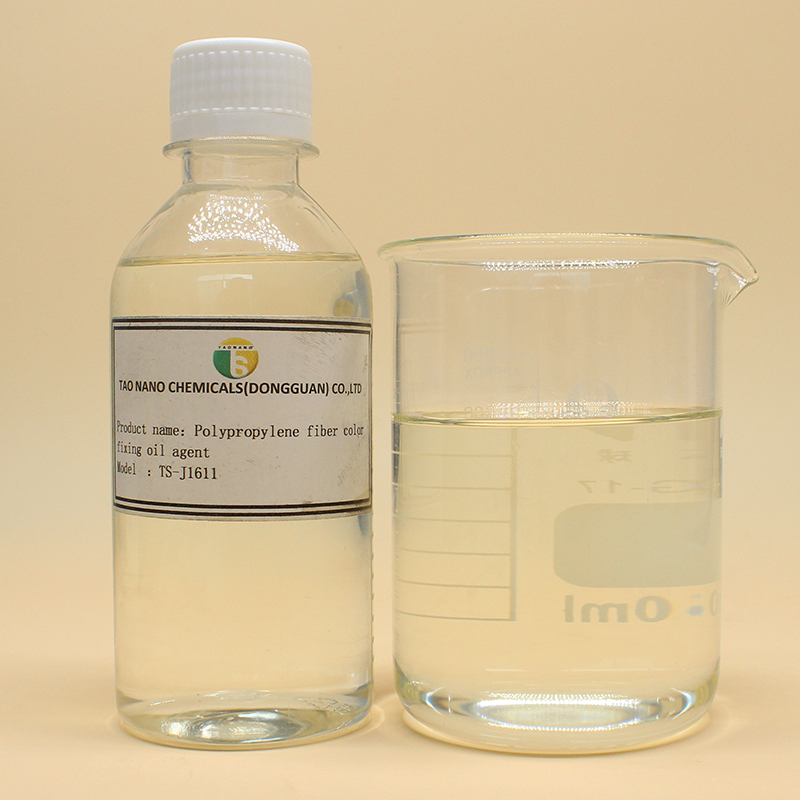
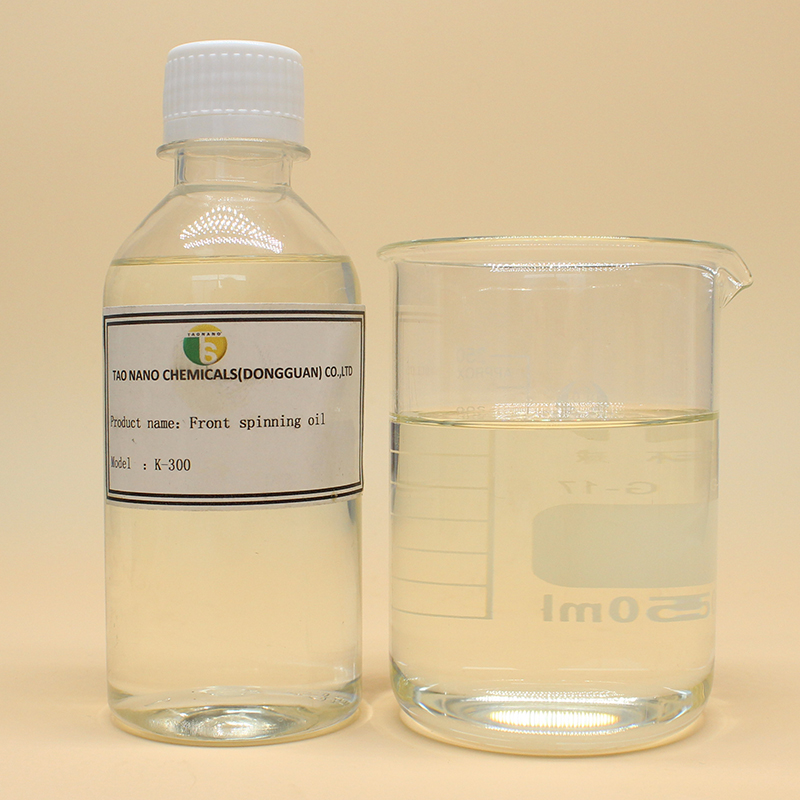
Effective application of polypropylene yarn spinning oil is crucial for trouble-free production. Drawing on extensive field experience, TAO NANO CHEMICALS (DONGGUAN) CO., LTD. discusses common challenges encountered during oil application and provides practical solutions to maintain process stability.
Operators may face several types of issues related to polypropylene yarn spinning oil. Challenges can stem from the oil itself, such as emulsion separation or sediment formation during storage, often linked to formulation or storage conditions. Process-related problems include uneven oil uptake on yarn, increased broken filaments, frequent roller lapping, or shortened component life. These may result from incorrect oil concentration, clogged application systems, or a mismatch between the oil properties and the specific polymer or process settings. Downstream processing difficulties, like poor yarn unwinding due to excessive cohesion or high residual static during weaving, also trace back to spinning oil performance.
To address these challenges, TAO NANO CHEMICALS emphasizes a systematic approach. Selecting a high-quality, consistent polypropylene yarn spinning oil is the foundation. The company ensures product reliability through rigorous testing and stability checks. Establishing proper handling procedures is equally important: regularly monitoring working bath concentration, pH, and emulsion stability, alongside maintaining clean application systems, prevents many common issues. For problems related to process compatibility, TAO NANO CHEMICALS provides technical support for on-site diagnosis. Their experts can analyze symptoms and process data to recommend adjustments in oil type, application rate, or even custom modifications to the formulation. Proactive communication with a knowledgeable supplier like TAO NANO CHEMICALS helps in preempting problems and achieving efficient, high-quality polypropylene yarn production.
TAO NANO Chemicals(Dongguan)Co., Ltd. specializes in R&D, production and sales of lubricants, thermal oils, nanochemical materials, daily chemical products and their additives, lubricant additives, textile oils (polypropylene pre-spinning oil, hair oil, polypropylene BCF Oil agent, polypropylene color-fixing oil agent, polypropylene filament oil agent, polyester oil agent) cleaning agent, surfactant, water-repellent softener and other goods are imported and exported. During the journey of cultivation, we have accumulated more than 20 years of practical experience. At the same time, together with the group company, we have gradually developed a group of high-quality teams, including more than ten doctoral experts, more than 50 professional technicians, and a management team of more than 100 people. The subsidiary factory covers a total area of about 60 acres.
- Which Indicators of Polypropylene Staple Fiber Oil Determine Roller‑Wrapping and Fib
- What Cascading Troubles Will Pre‑Coking Heat‑Transfer Oil Bring to Polypropyle
- Deterioration and Odor of Polypropylene Yarn Pre-spinning Oil Emulsion: Common Pitfalls in
- Large Variation of Pick-up Rate of PP Pre-spinning Oil: How to Control Oil Uniformity on Y
- Fuzz and Break‑outs in High‑Speed Spinning with Polypropylene Pre‑Spinni