
- Which Indicators of Polypropylene Staple Fiber Oil Determine Roller‑Wrapping and Fiber Agglomeration in High‑Speed Carding Process
- What Cascading Troubles Will Pre‑Coking Heat‑Transfer Oil Bring to Polypropylene Fiber Spinning Lines
- Deterioration and Odor of Polypropylene Yarn Pre-spinning Oil Emulsion: Common Pitfalls in Storage and Dilution
- Large Variation of Pick-up Rate of PP Pre-spinning Oil: How to Control Oil Uniformity on Yarn
- Fuzz and Break‑outs in High‑Speed Spinning with Polypropylene Pre‑Spinning Oil? Analysis of Pitfalls in Wetting Performance and Anti‑Coking Property

- Contact: Miss Tang
- Telephone: 0086-18926870629
- Email: taonano@taonanooil.com
- Address:No. 59, Liantang Road, Sanzhong Village, Qingxi Town, Dongguan City, Guangdong Province
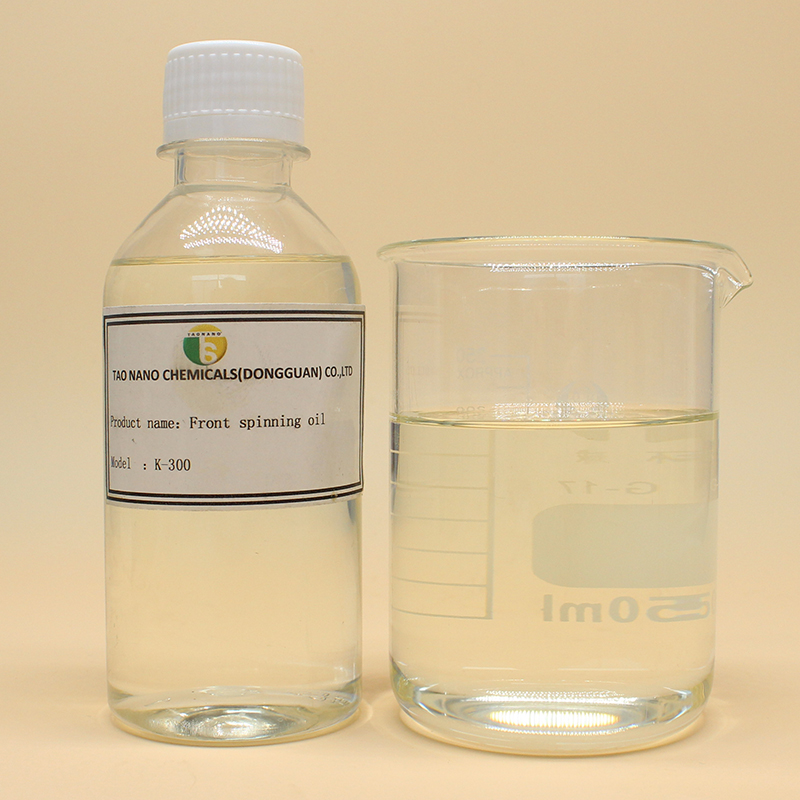
If you have ever observed the spinning process in a chemical fiber factory workshop, you will surely be deeply impressed by the high-speed running filament bundle. But few people notice that in the process of Polypropylene (PP) melt being ejected from the spinneret and cooling to solidify into fibers, there is a key material that is indispensable like "blood" - it is Polypropylene yarn spinning oil. This seemingly ordinary liquid bottle directly determines the quality of the fiber, production efficiency and even the success or failure of downstream applications.
Why can't oil agents be used in the spinning process?
Polypropylene itself has excellent chemical stability, but the primary fibers formed after its melt spinning have obvious defects: dry surface, high friction coefficient, and severe static electricity accumulation. Without the protection of oil agents, high-speed wound fibers are prone to generating fuzz and broken ends, and subsequent processes cannot be carried out smoothly. The core function of Polypropylene yarn spinning oil is precisely to form an extremely thin and uniform oil film on the fiber surface through precise formula design, thereby endowing the fiber with key processing properties such as smoothness, antistatic property and bundling property.
What exactly is in Polypropylene yarn spinning oil?
High-quality Polypropylene yarn spinning oil is by no means a simple grease, but a precise system compounded from multiple functional components. Usually includes:
Lubricant: Reduces the friction between fibers and filament guides as well as rollers, minimizing wear and lint.
Antistatic agent: Eliminates static electricity generated by friction during the production process to prevent the dispersion and entanglement of filaments.
Bundling agent: It ensures an appropriate binding force between single filaments, guaranteeing the integrity and processability of the filament bundle.
Emulsifier: Ensures that the oil agent can form a stable emulsion in water, facilitating uniform oiling.
Adjuster: Fine-tune the hand feel and performance of the fibers according to the season, workshop temperature and humidity, and subsequent application requirements.
Therefore, the formula of chemical fiber oiling agents is highly customized and needs to be precisely matched with the spinning speed, fiber specifications (such as fine denier, coarse denier), and final uses (such as spunbond nonwoven fabrics, short fibers, BCF carpet filaments).
How do oil agents affect the value of the industrial chain?
A poorly compatible oil agent can lead to a high production breakage rate, significant equipment wear and tear, fluctuations in product quality, and directly increase costs. An excellent Polypropylene yarn spinning oil can ensure the high-speed and stable operation of production and endow the fibers with good post-processing adaptability, such as ensuring the uniformity of web laying in non-woven fabric production or the smooth passage of short fibers during carding and needling processes.
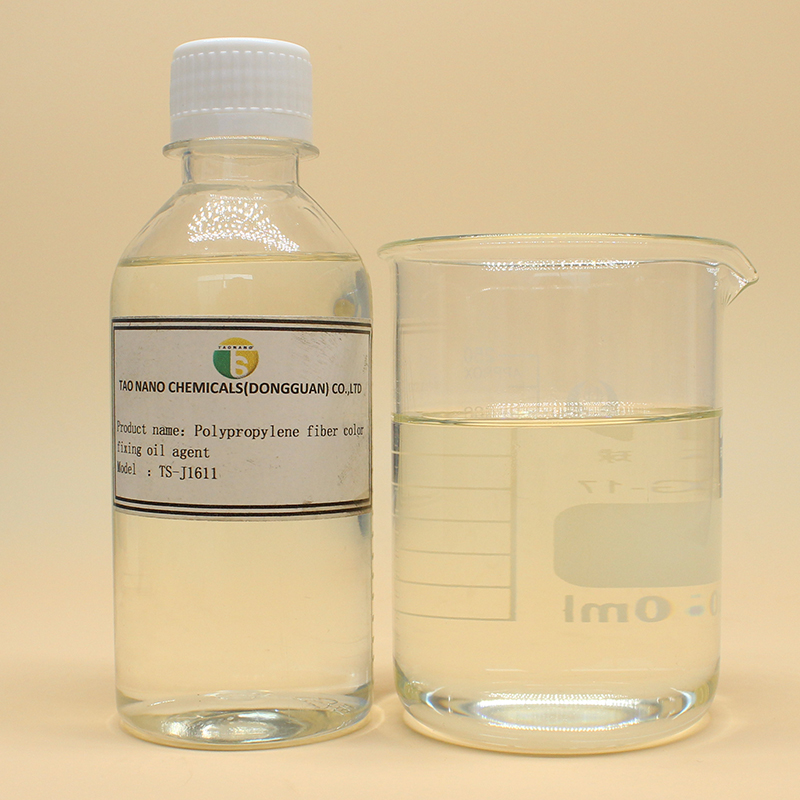
TAO NANO Chemicals(Dongguan)Co., Ltd. specializes in R&D, production and sales of lubricants, thermal oils, nanochemical materials, daily chemical products and their additives, lubricant additives, textile oils (polypropylene pre-spinning oil, hair oil, polypropylene BCF Oil agent, polypropylene color-fixing oil agent, polypropylene filament oil agent, polyester oil agent) cleaning agent, surfactant, water-repellent softener and other goods are imported and exported. During the journey of cultivation, we have accumulated more than 20 years of practical experience. At the same time, together with the group company, we have gradually developed a group of high-quality teams, including more than ten doctoral experts, more than 50 professional technicians, and a management team of more than 100 people. The subsidiary factory covers a total area of about 60 acres.
- Which Indicators of Polypropylene Staple Fiber Oil Determine Roller‑Wrapping and Fib
- What Cascading Troubles Will Pre‑Coking Heat‑Transfer Oil Bring to Polypropyle
- Deterioration and Odor of Polypropylene Yarn Pre-spinning Oil Emulsion: Common Pitfalls in
- Large Variation of Pick-up Rate of PP Pre-spinning Oil: How to Control Oil Uniformity on Y
- Fuzz and Break‑outs in High‑Speed Spinning with Polypropylene Pre‑Spinni