
- Which Indicators of Polypropylene Staple Fiber Oil Determine Roller‑Wrapping and Fiber Agglomeration in High‑Speed Carding Process
- What Cascading Troubles Will Pre‑Coking Heat‑Transfer Oil Bring to Polypropylene Fiber Spinning Lines
- Deterioration and Odor of Polypropylene Yarn Pre-spinning Oil Emulsion: Common Pitfalls in Storage and Dilution
- Large Variation of Pick-up Rate of PP Pre-spinning Oil: How to Control Oil Uniformity on Yarn
- Fuzz and Break‑outs in High‑Speed Spinning with Polypropylene Pre‑Spinning Oil? Analysis of Pitfalls in Wetting Performance and Anti‑Coking Property

- Contact: Miss Tang
- Telephone: 0086-18926870629
- Email: taonano@taonanooil.com
- Address:No. 59, Liantang Road, Sanzhong Village, Qingxi Town, Dongguan City, Guangdong Province
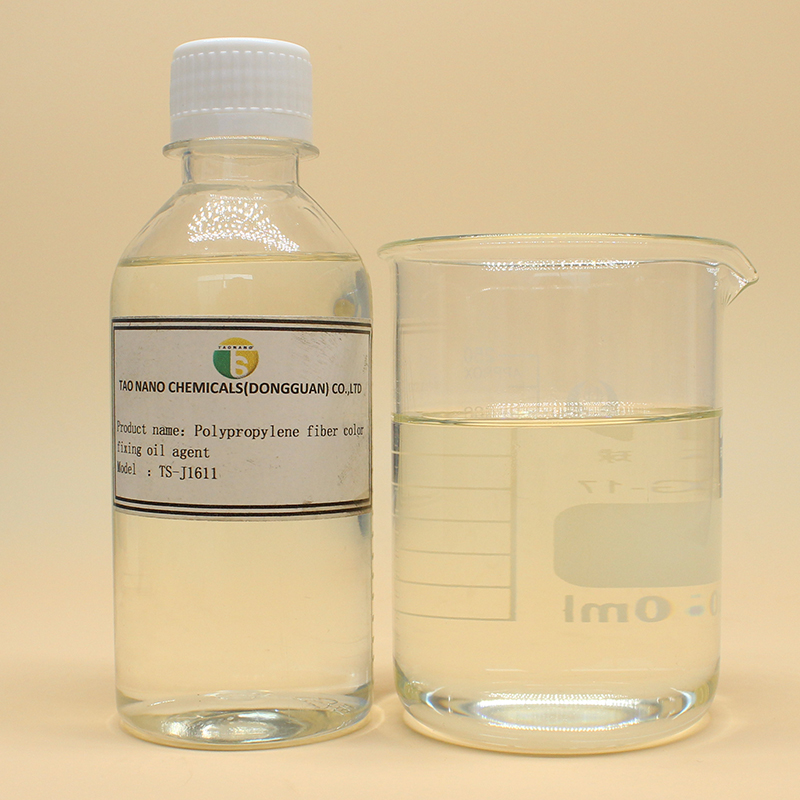
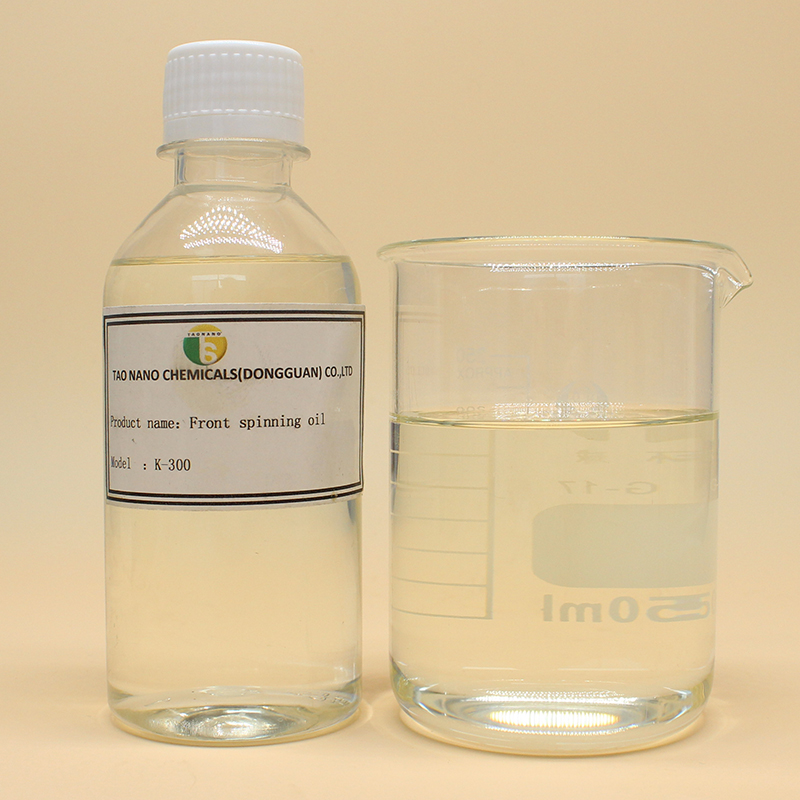
Polypropylene yarn spinning oil plays an indispensable role in the modern textile industry. This specialized oil, designed specifically for polypropylene fiber spinning, not only addresses technical challenges during the spinning process but also becomes a key factor in improving fiber quality. Technically, Polypropylene yarn spinning oil significantly reduces yarn breakage by lowering the friction coefficient between the fiber and machine components, making high-speed spinning possible. Its unique formula adapts to the hydrophobic properties of polypropylene, forming a uniform protective film on the fiber surface. This ensures stable spinning and avoids production hazards caused by static electricity accumulation.
The chemical composition of Polypropylene yarn spinning oil is carefully formulated, typically containing multiple functional components such as lubricants, antistatic agents, and emulsifiers. These components work synergistically to create an ideal spinning environment. The lubricant reduces frictional damage between the fiber and the yarn guide, the antistatic agent effectively dissipates static charge generated during the spinning process, and the emulsifier ensures stable dispersion of the oil in the aqueous solution. This strategic combination ensures excellent processability of polypropylene fibers during the spinning process while not affecting subsequent dyeing and finishing steps. It's worth noting that modern polypropylene spinning oils are developing towards environmentally friendly properties, with the use of biodegradable components significantly reducing the environmental burden.
With advances in textile technology and shifting market demands, the research and development of Polypropylene yarn spinning oils has shifted to multifunctionality and high performance. These new oils not only meet basic spinning requirements but also impart additional properties such as UV resistance and antibacterial properties to polypropylene fibers. In industrial applications, polypropylene fibers treated with high-quality spinning oils are experiencing an unprecedented breadth of applications, from medical textiles to automotive interiors, from geotextiles to high-end apparel fabrics. Particularly in the industrial textile sector, polypropylene fibers, thanks to their excellent chemical stability and cost advantages, combined with the use of high-performance spinning oils, are replacing traditional materials and ushering in a new era in textile applications.
- Which Indicators of Polypropylene Staple Fiber Oil Determine Roller‑Wrapping and Fib
- What Cascading Troubles Will Pre‑Coking Heat‑Transfer Oil Bring to Polypropyle
- Deterioration and Odor of Polypropylene Yarn Pre-spinning Oil Emulsion: Common Pitfalls in
- Large Variation of Pick-up Rate of PP Pre-spinning Oil: How to Control Oil Uniformity on Y
- Fuzz and Break‑outs in High‑Speed Spinning with Polypropylene Pre‑Spinni