
- Which Indicators of Polypropylene Staple Fiber Oil Determine Roller‑Wrapping and Fiber Agglomeration in High‑Speed Carding Process
- What Cascading Troubles Will Pre‑Coking Heat‑Transfer Oil Bring to Polypropylene Fiber Spinning Lines
- Deterioration and Odor of Polypropylene Yarn Pre-spinning Oil Emulsion: Common Pitfalls in Storage and Dilution
- Large Variation of Pick-up Rate of PP Pre-spinning Oil: How to Control Oil Uniformity on Yarn
- Fuzz and Break‑outs in High‑Speed Spinning with Polypropylene Pre‑Spinning Oil? Analysis of Pitfalls in Wetting Performance and Anti‑Coking Property

- Contact: Miss Tang
- Telephone: 0086-18926870629
- Email: taonano@taonanooil.com
- Address:No. 59, Liantang Road, Sanzhong Village, Qingxi Town, Dongguan City, Guangdong Province
Spinning oil is a key textile auxiliary agent, mainly used in the production and processing of chemical fiber, its main role includes regulating the friction properties of chemical fiber, prevent electrostatic accumulation, give the fiber smooth and soft characteristics, to ensure that the fiber can smoothly through the spinning, stretching, elastic, spinning and weaving processes.
Spinning oil composition:
Lubricant: The main role is to reduce friction, protect the fiber and equipment.
Antistatic agent: to prevent or eliminate the accumulation of static electricity, commonly used ingredients include polyethylene glycol, fatty acid glycerol ester, etc.
Emulsifier: To help the oil form a stable emulsion in water for easy application, commonly used fatty acid soaps and non-ionic surfactants.
Other additives: such as softeners, bunching agents, defoamers, preservatives, etc., are used to adjust the specific properties of the oil agent to suit different production needs.
Spinning oil action principle:
Antistatic: the hydrophilic group in the oil is adsorbed on the fiber surface, and the hydrophobic group forms a hydrophilic film toward the air, reducing the friction coefficient of the fiber, and absorbing water in the air at the same time, so that the generated static electricity is easy to transfer to the atmosphere.
Lubrication: The smoothing agent forms an oil film on the fiber surface, reduces the friction between the fiber and the fiber, the fiber and the metal, protects the fiber strength, and reduces the breakage rate.
Application field of spinning oil:
Widely used in the production of polyester, acrylic, nylon and other synthetic fibers, different types of fibers have different requirements for oil agents.
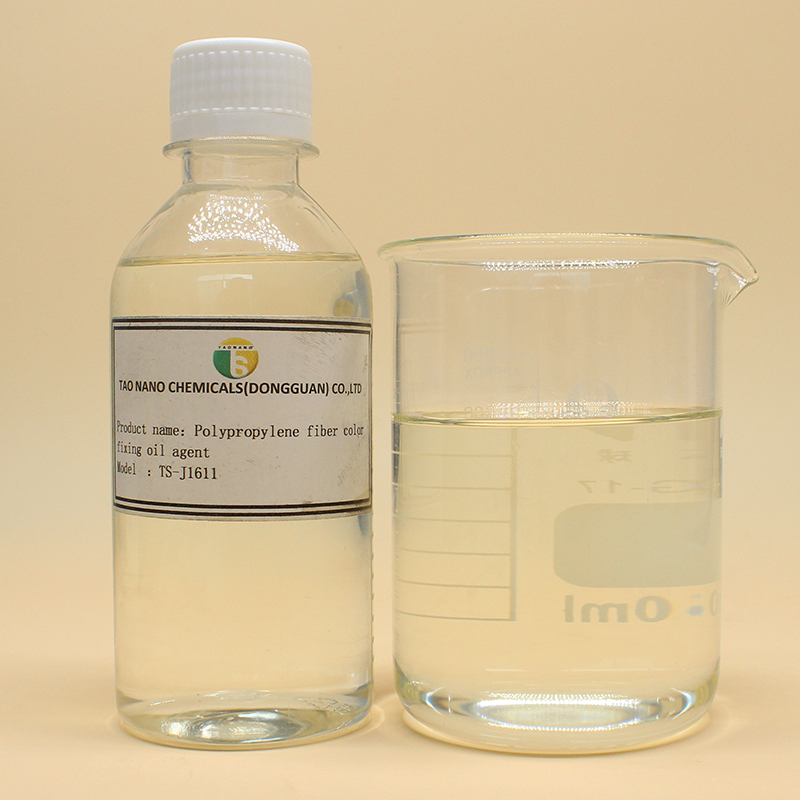
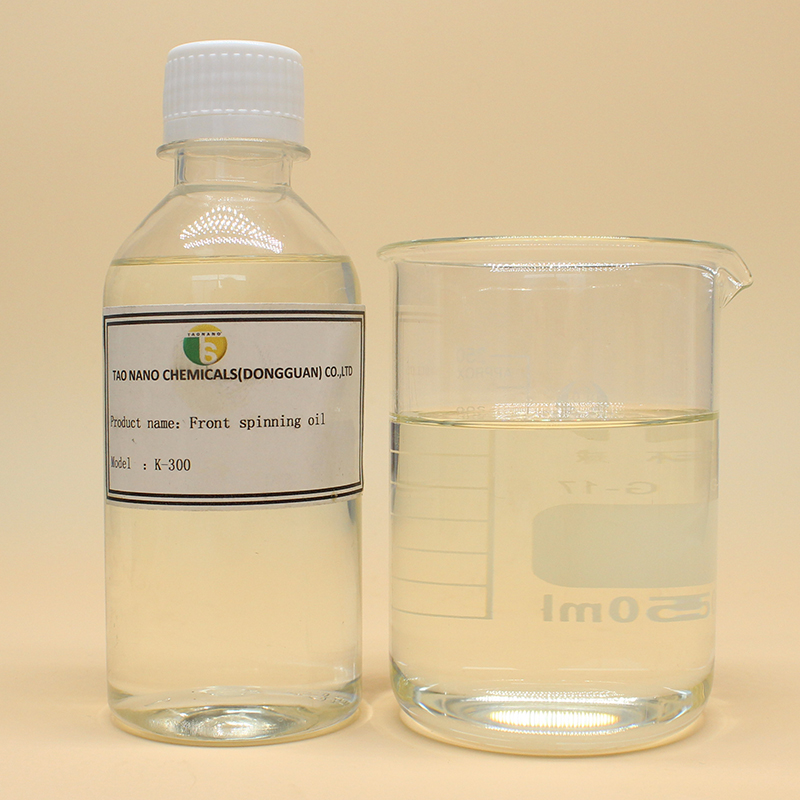
TAO NANO CHEMICALS(DONGGUAN) CO.,LTD. specializes in research and development, production and sales of lubricating oil, thermal oil, nano chemical materials, daily chemical products and additives, lubricating oil additives, textile oil (polypropylene pre-spinning oil, hair oil, polypropylene BCF oil, polypropylene color fixing oil, polypropylene filament oil, polyester oil) cleaning agents, surfactants, Water repellent softener and other goods import and export. In the cultivation journey has accumulated more than 20 years of practical experience, at the same time with the group company gradually has a group of high-quality team, more than 10 doctor experts, more than 50 professional and technical personnel, more than 100 management team. The subsidiary plant covers a total area of about 60 acres.
- Which Indicators of Polypropylene Staple Fiber Oil Determine Roller‑Wrapping and Fib
- What Cascading Troubles Will Pre‑Coking Heat‑Transfer Oil Bring to Polypropyle
- Deterioration and Odor of Polypropylene Yarn Pre-spinning Oil Emulsion: Common Pitfalls in
- Large Variation of Pick-up Rate of PP Pre-spinning Oil: How to Control Oil Uniformity on Y
- Fuzz and Break‑outs in High‑Speed Spinning with Polypropylene Pre‑Spinni