
- Which Indicators of Polypropylene Staple Fiber Oil Determine Roller‑Wrapping and Fiber Agglomeration in High‑Speed Carding Process
- What Cascading Troubles Will Pre‑Coking Heat‑Transfer Oil Bring to Polypropylene Fiber Spinning Lines
- Deterioration and Odor of Polypropylene Yarn Pre-spinning Oil Emulsion: Common Pitfalls in Storage and Dilution
- Large Variation of Pick-up Rate of PP Pre-spinning Oil: How to Control Oil Uniformity on Yarn
- Fuzz and Break‑outs in High‑Speed Spinning with Polypropylene Pre‑Spinning Oil? Analysis of Pitfalls in Wetting Performance and Anti‑Coking Property

- Contact: Miss Tang
- Telephone: 0086-18926870629
- Email: taonano@taonanooil.com
- Address:No. 59, Liantang Road, Sanzhong Village, Qingxi Town, Dongguan City, Guangdong Province
What are the characteristics of heat transfer oil?
Dongguan Dow Nano Chemical Co., Ltd. produced thermal oil has: thermal cracking resistance and chemical oxidation performance, good heat transfer efficiency, fast heat dissipation, good thermal stability.
Heat transfer oil can be used in: chemical fiber, textile printing and dyeing, hot melt dyeing, heat setting, drying equipment.
Thermal oil has the following characteristics:
1. In the allowable temperature range, the thermal stability is good, less coking, and the operating temperature is -10--305. Under certain conditions, its maximum permissible temperature is 320.
2. In the allowable temperature range, the thermal conductivity, flow performance and pumpability are good.
3. Low toxicity, tasteless, does not corrode the equipment, and has little impact on the environment.
4. The freezing point is lower, the boiling point is higher, and the low boiling point component content is less. In the allowable temperature range, the steam pressure is not high, and the evaporation loss is less.
5. When the temperature is higher than 70 ° C, the contact with the air will be strongly oxidized, and the heating working system needs to be sealed, and only allow it to contact the air at a temperature below 70 ° C.
6. Cracking or condensation will occur when overheating, coking or carbon deposition in containers and pipes.
7. When mixed with water or low boiling point group, the vapor pressure will be significantly increased after heating.
8. According to the area where the user lives and the operating environment of the equipment, it is recommended to choose the appropriate low-temperature thermal oil.
9. Heat transfer oil can be mixed with general heat transfer oil, and can be recycled.
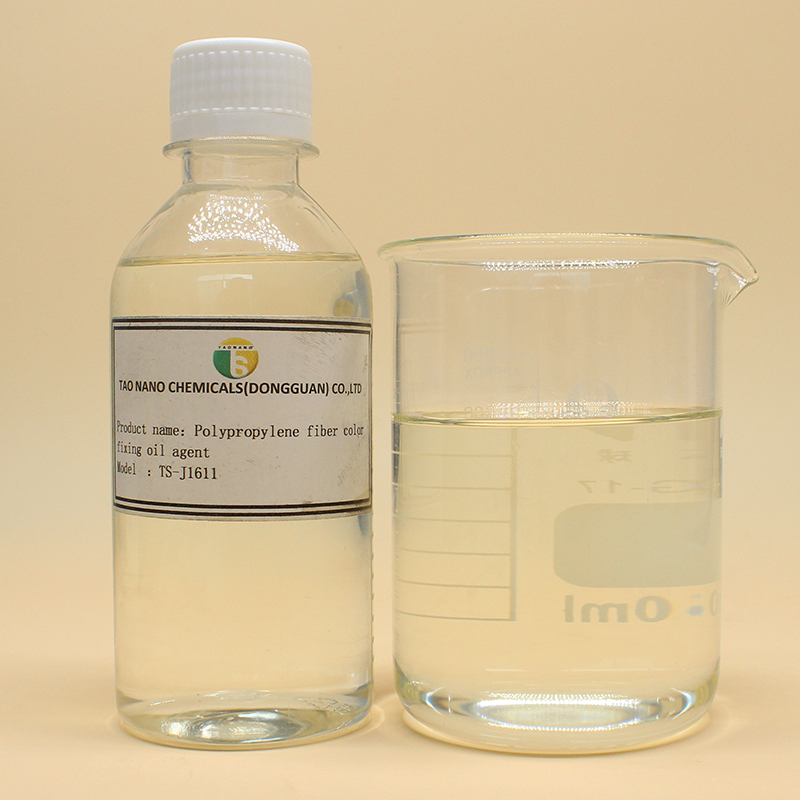
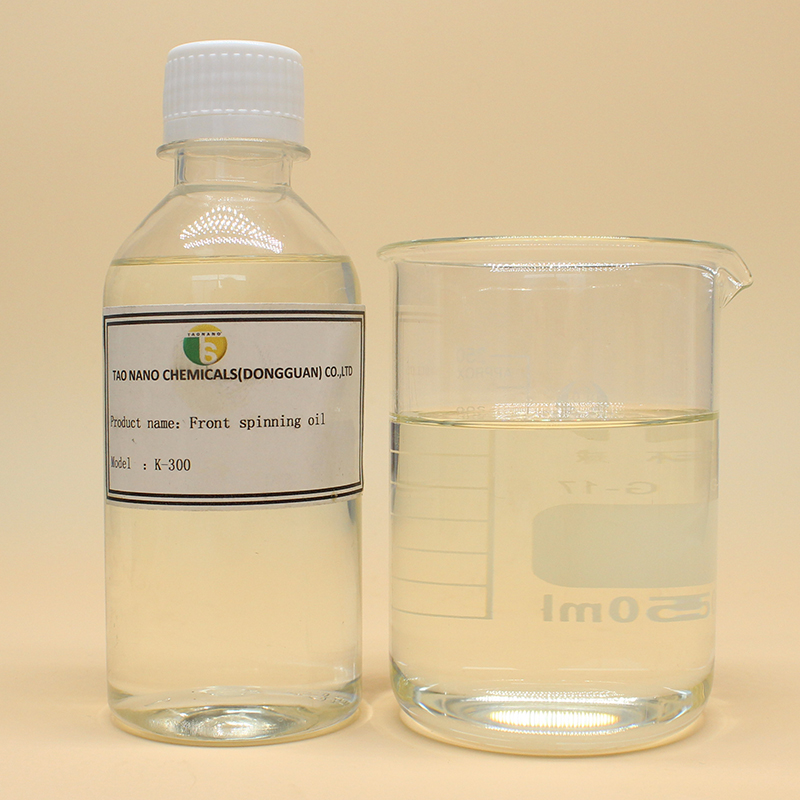
Dongguan Tao Nano Chemical Co., Ltd. specializes in research and development, production and sales of lubricating oil, antistatic agent, pre-spinning oil, thermal oil, nano chemical materials, daily chemical products and additives, lubricating oil additives, textile oil (polypropylene pre-spinning oil, hair oil, polypropylene BCF oil, polypropylene color fixing oil, polypropylene filament oil, polyester oil) cleaning agent, surfactants, Water repellent softener and other goods import and export. In the cultivation journey has accumulated more than 20 years of practical experience, at the same time with the group company gradually has a group of high-quality team, more than 10 doctor experts, more than 50 professional and technical personnel, more than 100 management team. The subsidiary plant covers a total area of about 60 acres.
- Which Indicators of Polypropylene Staple Fiber Oil Determine Roller‑Wrapping and Fib
- What Cascading Troubles Will Pre‑Coking Heat‑Transfer Oil Bring to Polypropyle
- Deterioration and Odor of Polypropylene Yarn Pre-spinning Oil Emulsion: Common Pitfalls in
- Large Variation of Pick-up Rate of PP Pre-spinning Oil: How to Control Oil Uniformity on Y
- Fuzz and Break‑outs in High‑Speed Spinning with Polypropylene Pre‑Spinni