- Which Indicators of Polypropylene Staple Fiber Oil Determine Roller‑Wrapping and Fiber Agglomeration in High‑Speed Carding Process
- What Cascading Troubles Will Pre‑Coking Heat‑Transfer Oil Bring to Polypropylene Fiber Spinning Lines
- Deterioration and Odor of Polypropylene Yarn Pre-spinning Oil Emulsion: Common Pitfalls in Storage and Dilution
- Large Variation of Pick-up Rate of PP Pre-spinning Oil: How to Control Oil Uniformity on Yarn
- Fuzz and Break‑outs in High‑Speed Spinning with Polypropylene Pre‑Spinning Oil? Analysis of Pitfalls in Wetting Performance and Anti‑Coking Property

- Contact: Miss Tang
- Telephone: 0086-18926870629
- Email: taonano@taonanooil.com
- Address:No. 59, Liantang Road, Sanzhong Village, Qingxi Town, Dongguan City, Guangdong Province
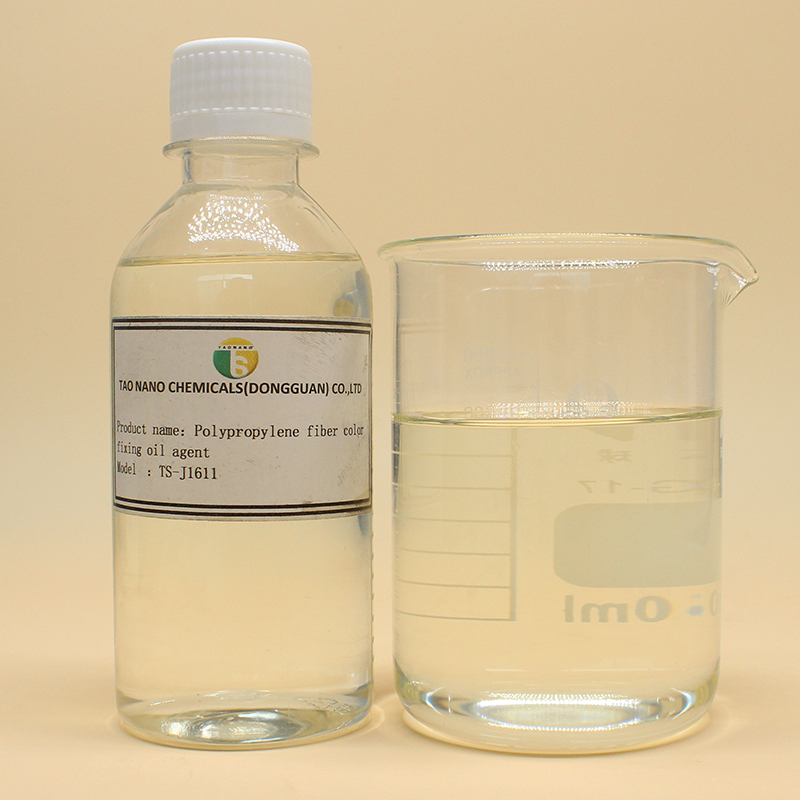
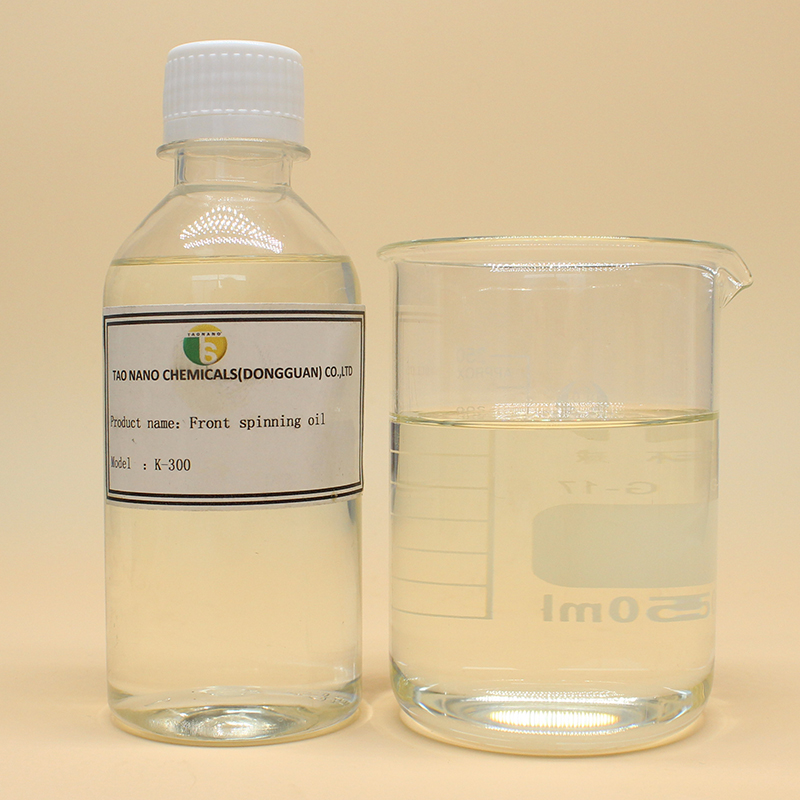
Spinning oil mainly includes smoothing and softening agent, bunching agent, antistatic agent, emulsifier, balance regulator and so on. These chemicals in the preparation of the oil agent process, relying on a single surfactant is difficult to adapt to the requirements of all aspects, must be different types of surfactants mixed together, complement each other, play its coordination effect. The main function of spinning oil is to regulate the friction properties of chemical fibers, prevent or eliminate the accumulation of static electricity, give the fibers smooth, bunching, antistatic, soft and other properties, so that the chemical fibers smoothly through the spinning, stretching, elastic, spinning and weaving processes. Although the amount of chemical fiber oil is very small in the production of chemical fiber, it plays an important role in the quality of fiber.
Spinning oil has been developed for five generations. It is mainly composed of mineral oil at first, and then emulsifier and antistatic agent are added. With the development of technology, the second generation of oil is based on fatty acid ester, and the third generation of oil is based on fatty acid ester and propylene oxide/ethylene oxide, polyether. The fourth generation oil agent is mainly propylene oxide/ethylene oxide polyether. The fifth generation of oil is adapted to the development of high-speed, ultra-high-speed and multi-functional fibers of chemical fiber filaments, and developed modified propylene oxide/ethylene oxide polyether and oils composed of special functions such as low friction, ultra-heat resistance, easy wetting and other special functions.
The composition and ratio of these chemicals vary according to different chemical fiber varieties and process requirements to ensure smooth production and improved fiber quality.
Declaration: The content of this article is organized from the Internet, and the copyright belongs to the original author; If there is infringement, please inform in time and contact to delete.
- Which Indicators of Polypropylene Staple Fiber Oil Determine Roller‑Wrapping and Fib
- What Cascading Troubles Will Pre‑Coking Heat‑Transfer Oil Bring to Polypropyle
- Deterioration and Odor of Polypropylene Yarn Pre-spinning Oil Emulsion: Common Pitfalls in
- Large Variation of Pick-up Rate of PP Pre-spinning Oil: How to Control Oil Uniformity on Y
- Fuzz and Break‑outs in High‑Speed Spinning with Polypropylene Pre‑Spinni