
- Which Indicators of Polypropylene Staple Fiber Oil Determine Roller‑Wrapping and Fiber Agglomeration in High‑Speed Carding Process
- What Cascading Troubles Will Pre‑Coking Heat‑Transfer Oil Bring to Polypropylene Fiber Spinning Lines
- Deterioration and Odor of Polypropylene Yarn Pre-spinning Oil Emulsion: Common Pitfalls in Storage and Dilution
- Large Variation of Pick-up Rate of PP Pre-spinning Oil: How to Control Oil Uniformity on Yarn
- Fuzz and Break‑outs in High‑Speed Spinning with Polypropylene Pre‑Spinning Oil? Analysis of Pitfalls in Wetting Performance and Anti‑Coking Property

- Contact: Miss Tang
- Telephone: 0086-18926870629
- Email: taonano@taonanooil.com
- Address:No. 59, Liantang Road, Sanzhong Village, Qingxi Town, Dongguan City, Guangdong Province
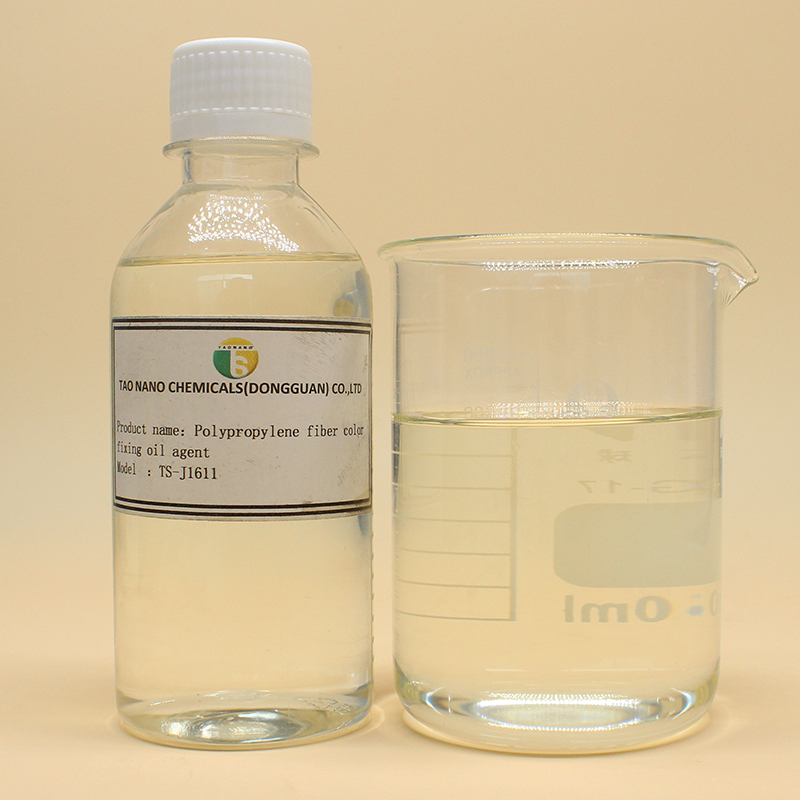
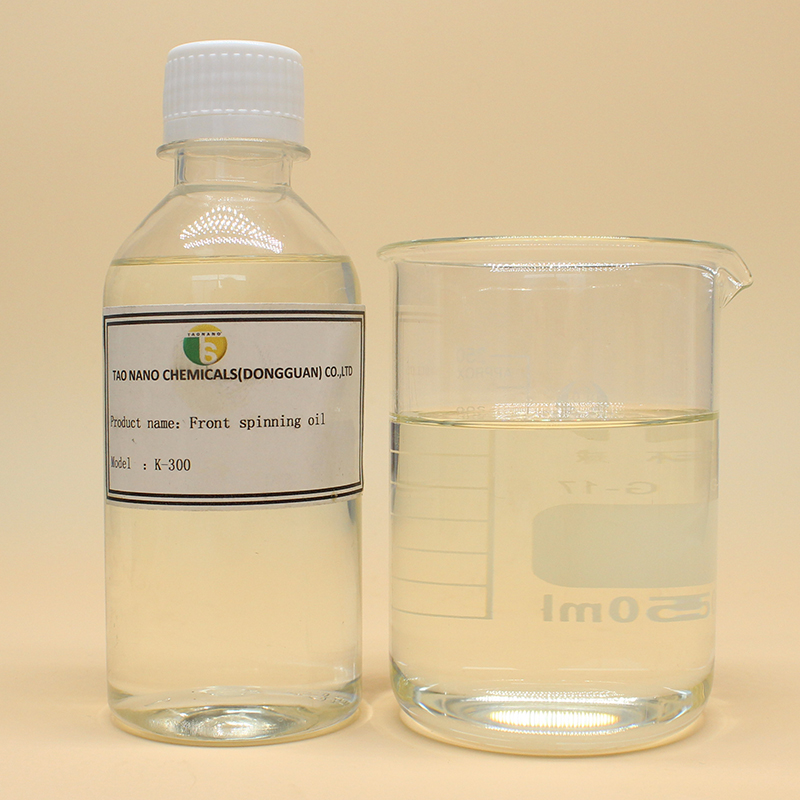
Polypropylene fiber (polypropylene) light texture, high strength, good elasticity, wear-resistant, developing very rapidly in our country. However, because there is no polar group in the molecular structure of polypropylene fiber, its moisture absorption is small, poor electrical conductivity, tight structure, large friction coefficient and itself does not contain fatty substances, so in the subsequent processing of spinning, the filament is easy to slip, scattered, resulting in wool and waste silk. This requires oil treatment between spinning and winding bobbin, forming an oil film on its surface, improving fiber smoothness, reducing the friction coefficient of the tow, enhancing spinnability, improving spinning efficiency, and protecting the quality of the fiber.
Polypropylene oil formula is composed of a variety of components, mainly smoothing agent, antistatic agent, emulsifier and other small amount of additives, mainly using surfactant products. At present, the main smoothing agent used in polypropylene spinning oil is fatty acid ester smoothing agent. Antistatic agents can be divided into anionic, cationic, nonionic and amphoteric surfactants according to the charge properties of the polar groups connected to the long chain alkyl group in the molecule. In general, the best antistatic effect is cationic and amphoteric type, followed by anionic type, non-ionic type antistatic worst. Considering the cost factor, the most widely used antistatic agents are fatty alcohol phosphate (salt) and alcohol ether phosphate (salt) antistatic agents. Because the spinning oil is often used as an oil-in-water suspension, the emulsifier must be added. The role of emulsifier is to balance each monomer surfactant in the oil through the physical and chemical process, so that the oil becomes a uniform, transparent and stable oil solution, and can become a uniform, transparent and stable emulsion when the oil is used. When selecting an emulsifier, it is necessary to consider its compatibility with other ingredients in the formula.
In addition, when using polypropylene oil agent, it is necessary to be in a cold dark room with good ventilation and 20~30 ° C, and must not be placed in a high temperature place.
- Which Indicators of Polypropylene Staple Fiber Oil Determine Roller‑Wrapping and Fib
- What Cascading Troubles Will Pre‑Coking Heat‑Transfer Oil Bring to Polypropyle
- Deterioration and Odor of Polypropylene Yarn Pre-spinning Oil Emulsion: Common Pitfalls in
- Large Variation of Pick-up Rate of PP Pre-spinning Oil: How to Control Oil Uniformity on Y
- Fuzz and Break‑outs in High‑Speed Spinning with Polypropylene Pre‑Spinni