
- Large Variation of Pick-up Rate of PP Pre-spinning Oil: How to Control Oil Uniformity on Yarn
- Deterioration and Odor of Polypropylene Yarn Pre-spinning Oil Emulsion: Common Pitfalls in Storage and Dilution
- Fuzz and Break‑outs in High‑Speed Spinning with Polypropylene Pre‑Spinning Oil? Analysis of Pitfalls in Wetting Performance and Anti‑Coking Property
- How to Match Proper Spinning Oil for Geotextile and Hygiene‑Grade Polypropylene Staple Fiber
- Carding‑Roller Tangling Caused by Polypropylene Staple Fiber Oil? Analysis of Production Risks Brought by Thermal‑Stability & Emulsion Compatibility

- Contact: Miss Tang
- Telephone: 0086-18926870629
- Email: taonano@taonanooil.com
- Address:No. 59, Liantang Road, Sanzhong Village, Qingxi Town, Dongguan City, Guangdong Province
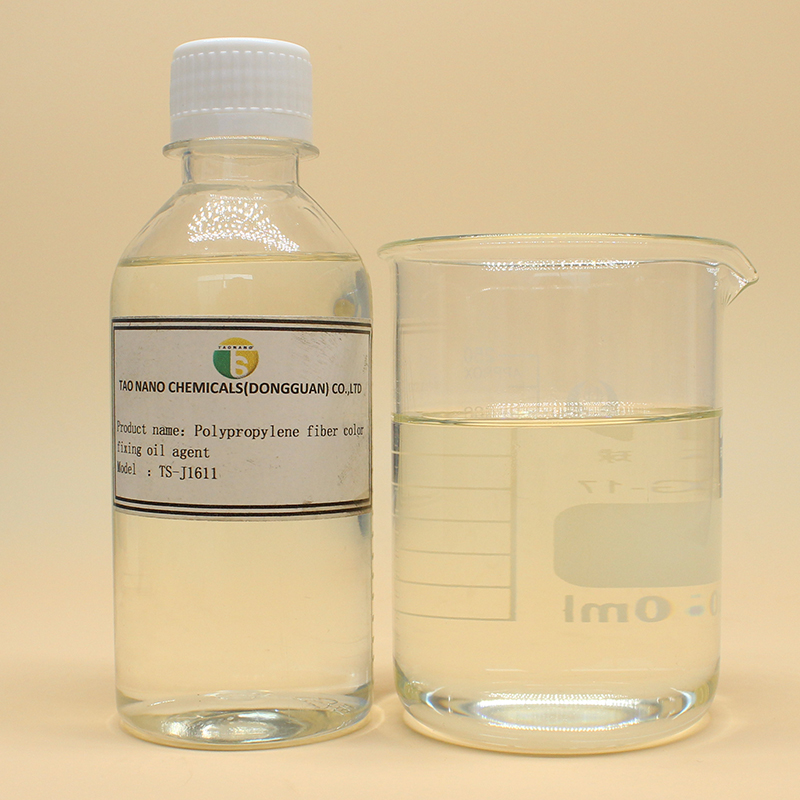
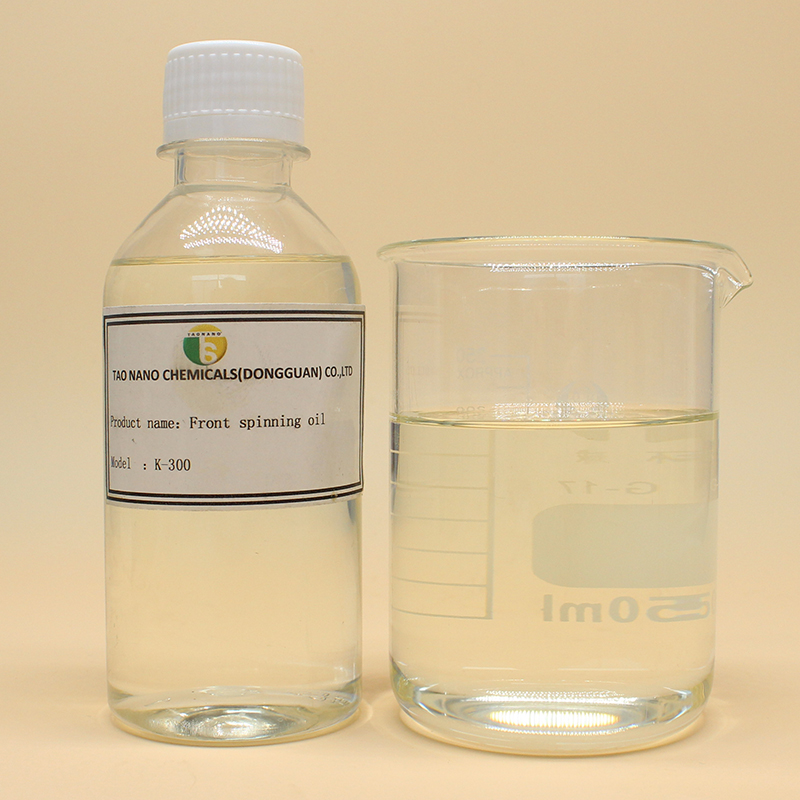
During the production process of polypropylene (Polypropylene) filaments, the selection of spinning oil plays a crucial role in determining the quality of the yarn and the efficiency of subsequent processing. A suitable Polypropylene yarn spinning oil not only needs to reduce the friction between the fibers and metal components, but also needs to address the issues of the strong hydrophobicity of polypropylene and the tendency to generate static electricity.
For the high-speed spinning process of polypropylene, a high-quality spinning oil should possess three core functions. The first is smoothness, which is achieved by forming a uniform oil film to reduce the friction coefficient at contact points such as the guide hook and heating roller, thereby preventing the generation of fuzz. The second is anti-static property, as polypropylene has a high volume resistivity. The spinning oil must contain special anti-static components that can quickly disperse the frictional charges and prevent the yarn from becoming disordered or tangled. The third is heat resistance stability. During the heat stretching process, the volatile substances of the oil should be controlled within a reasonable range to reduce coking and carbon deposition.
In actual production, the concentration of the oiling agent needs to be adjusted according to the spinning speed and the denier of the yarn. For conventional polypropylene filament yarns, the recommended concentration is within the range of 8% to 12%. For high-speed spinning processes, it can be appropriately increased to around 15%. The oiling method uses an oil sprayer or a metering pump for precise spraying to ensure that the oil agent evenly covers each individual fiber. It should be noted that excessive oiling will cause subsequent dyeing to be mottled, while insufficient oiling will exacerbate the damage to the yarn.
From the perspective of the formula, the mature Polypropylene yarn spinning oil usually adopts a mineral oil-based and synthetic ester composite system, combined with non-ionic surfactants to maintain the dynamic wetting tension. The pH value of this type of oil should be controlled within the neutral range of 6.5-7.5 to avoid corrosion of equipment components. Regularly testing the concentration of the oil emulsion and the degree of spoilage can effectively extend the replacement cycle of the oil tank.
In conclusion, choosing the appropriate Polypropylene yarn spinning oil agent and controlling the process parameters can help enhance the strength of the yarn and the uniformity of the dyeing, as well as reduce the breakage rate. For the production of differentiated polypropylene products (such as fine denier yarns and flame-retardant yarns), it is necessary to adjust the adhesion rate and unwinding performance of the oil agent specifically.
- Large Variation of Pick-up Rate of PP Pre-spinning Oil: How to Control Oil Uniformity on Y
- Deterioration and Odor of Polypropylene Yarn Pre-spinning Oil Emulsion: Common Pitfalls in
- Fuzz and Break‑outs in High‑Speed Spinning with Polypropylene Pre‑Spinni
- How to Match Proper Spinning Oil for Geotextile and Hygiene‑Grade Polypropylene Stap
- Carding‑Roller Tangling Caused by Polypropylene Staple Fiber Oil? Analysis of Produc